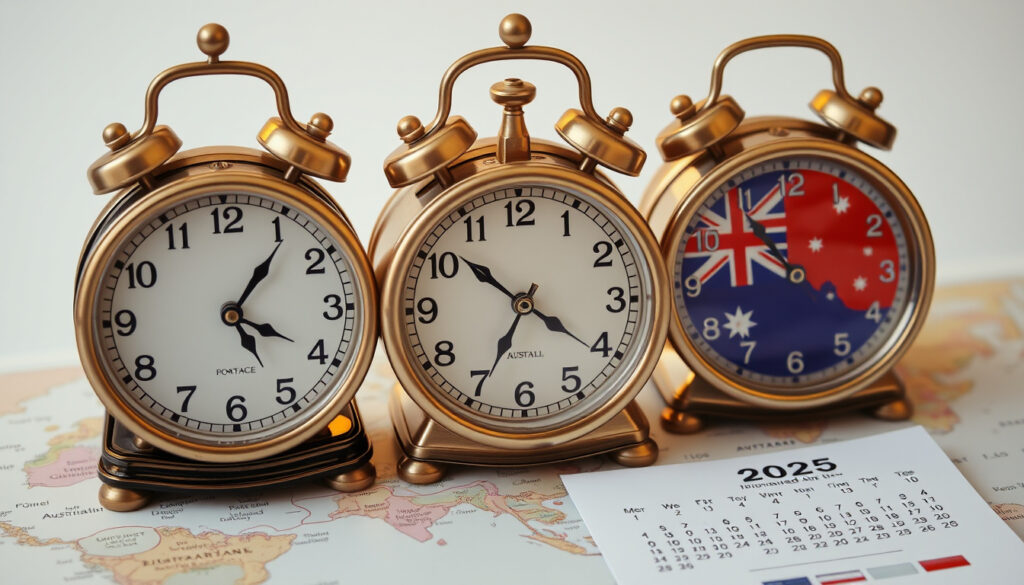
When Do Clocks Go Forward – 2025 Dates UK US Australia
Twice a year, billions of people around the world adjust their clocks in a practice known as Daylight Saving Time. The spring change brings longer evenings but requires a brief adjustment period for the body. In 2025, the dates and times for this ritual vary significantly across different regions, from the United Kingdom to Australia. Understanding when and where these changes occur helps travellers, businesses, and individuals plan accordingly.
The practice of moving clocks forward emerged during the First World War as a measure to conserve energy. Today, it remains a fixture in many countries, though not all participate. Those living in regions that observe daylight saving time must remember to shift their schedules, update devices, and prepare for the temporary disruption to sleep patterns that accompanies the change.
When Do the Clocks Go Forward?
The timing of clock changes depends entirely on where you are in the world. While the basic principle remains the same—advancing clocks by one hour to extend evening daylight—the specific dates and times vary according to regional regulations. In 2025, three major zones see their clocks move forward on different Sundays.
Key Insights About the Clock Changes
- Clocks advance by exactly one hour during the spring forward, shifting an hour of daylight from morning to evening.
- The United Kingdom’s change marks the beginning of British Summer Time, which runs until the autumn changeover in October.
- Most electronic devices update automatically, but traditional clocks, car clocks, and some appliances require manual adjustment.
- The United States changes two weeks earlier than the UK and EU, which can create scheduling confusion for transatlantic communication.
- Australia’s change occurs in October because the Southern Hemisphere seasons are reversed compared to the north.
- Not all regions within a country participate—Arizona and Hawaii in the US, for example, maintain standard time year-round.
2025 Clock Change Dates by Region
| Region | Forward Date (2025) | Forward Time | Back Date (2025) | Back Time |
|---|---|---|---|---|
| United Kingdom | 30 March | 1:00 AM GMT → 2:00 AM BST | 26 October | 2:00 AM BST → 1:00 AM GMT |
| European Union | 30 March | 1:00 AM UTC → 2:00 AM CET | 26 October | 1:00 AM CET → 12:00 AM UTC |
| United States (most states) | 9 March | 2:00 AM → 3:00 AM | 2 November | 2:00 AM → 1:00 AM |
| Australia (southern/eastern states) | 5 October | 2:00 AM → 3:00 AM | 6 April | 3:00 AM → 2:00 AM |
The official UK government guidance confirms these dates follow the established pattern of the last Sunday in March and October. European regulations harmonised these dates across member states in 1996, creating a consistent schedule for the continent.
What Time Do the Clocks Change Forward?
The exact moment clocks spring forward varies by jurisdiction. In the United Kingdom and across the European Union, the change occurs at 1:00 AM local time on the last Sunday in March. In the United States, the shift happens at 2:00 AM local time on the second Sunday in March. Australia observes its spring change at 2:00 AM on the first Sunday in October.
These specific times were chosen for practical reasons. The changes occur in the early hours when most people are asleep, minimising disruption to business operations and reducing the risk of confusion during the transition period. The midnight to 3:00 AM window represents the lowest point of daily activity for most industries.
What Happens When Clocks Go Forward
When clocks spring forward, time effectively “jumps” forward by one hour. At the moment of change, the clock skips from 1:59 AM directly to 3:00 AM in the UK and EU, or from 1:59 AM to 3:00 AM in the US and Australia. This means the hour between 2:00 AM and 3:00 AM effectively disappears from that day.
The practical consequence is a loss of one hour of sleep for anyone who sleeps through the night. A person who normally sleeps from 11:00 PM to 7:00 AM will find themselves waking at what feels like 6:00 AM—their body will not have completed its normal rest cycle. This sleep disruption triggers a cascade of temporary effects that most people experience but few fully understand.
The hour lost in spring creates immediate effects on work schedules, school start times, and public transport timetables. Morning appointments scheduled during the affected hour may need rescheduling. Broadcasters and digital services typically adjust their programming grids to accommodate the change.
Which Countries Observe Clocks Going Forward?
Daylight Saving Time is far from universal. While most countries in temperate zones adopted the practice after the First World War, many have since abandoned it, and some never participated at all. The global distribution of DST-observing nations reflects a complex mix of geography, politics, and practical considerations.
Countries That Change Their Clocks
In Europe, virtually every country participates, including all 27 EU member states, the United Kingdom, Norway, and Switzerland. The European schedule—last Sunday in March and October—has been standardised since 1996. Russia discontinued seasonal time changes in 2014 and now observes permanent standard time, creating a significant time difference with its western neighbours during the European summer.
Most of North America participates. Canada follows patterns similar to the United States, with the spring change occurring on the same second Sunday in March. However, the provinces of Saskatchewan, most of Indiana, and parts of other regions maintain consistent time without observing DST.
Countries That Do Not Change Their Clocks
- Arizona (United States) — The Navajo Nation within Arizona does observe DST, creating a complex patchwork of time zones within the state.
- Hawaii — This Pacific state maintains standard time year-round, benefiting from consistent tropical daylight patterns.
- Most African nations — The continent has largely abandoned DST, with only a handful of small island nations maintaining the practice.
- China — Despite spanning five natural time zones, the entire country uses a single standard time and does not observe seasonal changes.
- Japan, South Korea, and Taiwan — These East Asian nations have considered but never implemented seasonal clock changes.
- Iceland — Located close to the Arctic Circle, Iceland experiences extreme seasonal daylight variations that make standard time changes impractical.
The comprehensive list of countries maintained by Wikipedia provides detailed information on time practices worldwide, including historical changes and regional exceptions within nations.
Does Australia Have Clocks Going Forward?
Yes, but only in parts of the country. Australia’s eastern and southern states—Australian Capital Territory, New South Wales (except Lord Howe Island), South Australia, Tasmania, Victoria, and Norfolk Island—observe daylight saving time. The change occurs on the first Sunday in October at 2:00 AM, shifting to 3:00 AM.
Queensland, the Northern Territory, and Western Australia do not observe DST. This creates a complex situation where the country effectively operates with up to five different time zones during summer. Lord Howe Island, part of New South Wales, uses a unique 30-minute shift rather than a full hour, reflecting its distinct geographical position.
When it is noon in Sydney during summer daylight saving time, it is 11:30 AM in Lord Howe Island, noon in Queensland, 11:00 AM in the Northern Territory, and 9:00 AM in Western Australia. Those travelling to Australia should verify local time arrangements for each destination.
Why Do Clocks Go Forward and When Do They Go Back?
The rationale behind seasonal clock changes centres on energy conservation and alignment of human activity with natural daylight patterns. By shifting an hour of morning daylight to the evening, the theory suggests reduced need for artificial lighting during productive evening hours. The practice emerged during wartime but has persisted in peacetime for various economic and social reasons.
The Annual Cycle of Clock Changes
The cycle follows a predictable pattern in the Northern Hemisphere: clocks spring forward in March to begin Daylight Saving Time, then fall back in October to return to standard time. This creates a period of extended evening light during spring and summer months, followed by a return to earlier sunsets during autumn and winter.
- Spring Forward — Usually late March (UK/EU) or early March (US). Clocks advance by one hour, beginning the period of extended evening daylight.
- Summer Period — Extended daylight hours through June, July, and August in the Northern Hemisphere, with sunsets occurring well after 8:00 PM in many locations.
- Fall Back — Usually late October (UK/EU) or early November (US). Clocks retreat by one hour, restoring standard time as days grow shorter.
- Winter Period — Shortened daylight hours with earlier sunsets, ending with the return of spring forward the following year.
The Royal Museums Greenwich documents how the United Kingdom formalised its current arrangements through the 1972 British Summer Time Act, establishing the framework that continues today despite periodic debates about reform.
Historical Origins of the Practice
Germany introduced the first nationwide daylight saving time in 1916 during the First World War, seeking to reduce artificial lighting costs and conserve coal reserves. The United Kingdom followed shortly after, and the practice spread to other combatant nations. After the war, most countries reverted to standard time, though some reintroduced seasonal changes in subsequent decades.
The United States standardised its approach through the Uniform Time Act of 1966, though individual states could apply for exemptions. The Energy Policy Act of 2005 extended DST by four weeks beginning in 2007, moving the spring change from the first Sunday in April to the second Sunday in March and the autumn change from the last Sunday in October to the first Sunday in November.
How to Prepare for the Clock Change
The sudden one-hour shift affects human circadian rhythms in measurable ways. Sleep scientists have documented increases in workplace accidents, traffic collisions, and cardiovascular events in the days following the spring change. Preparing in advance can minimise these effects and smooth the transition.
Before the Change
- Gradual adjustment — Shifting bedtime and wake time 15 to 30 minutes earlier over three to four days before the change reduces the shock to your sleep schedule.
- Evening light exposure — Bright light in the early evening helps reset circadian rhythms by signalling wakefulness to the brain.
- Device updates — Enable automatic time updates on smartphones, computers, and tablets. Check manually updated devices like traditional clocks, car clocks, and alarm clocks.
- Schedule review — Note any early morning commitments in the week following the change that may feel more demanding than usual.
Studies have documented an approximately 8% increase in heart attack admissions in the days following the spring clock change. The disruption to sleep and circadian rhythms creates measurable stress on the cardiovascular system. Those with existing heart conditions should consult healthcare providers about managing the transition period.
After the Change
- Morning sunlight — Exposure to natural light in the first hours after waking helps realign circadian rhythms to the new schedule.
- Caffeine strategy — Moderate morning coffee consumption can offset morning grogginess, but avoid afternoon caffeine, which may interfere with sleep that night.
- Short naps — If necessary, limit naps to 20 to 30 minutes to avoid entering deep sleep that could disrupt nighttime rest.
- Exercise timing — Morning or early afternoon exercise supports circadian adjustment, while evening workouts may delay sleep onset.
The National Institute of Standards and Technology provides resources for understanding time changes in the United States, while the European Commission offers guidance for EU residents.
What We Know and What Remains Uncertain
Despite over a century of practice, certain aspects of daylight saving time remain established facts while others involve ongoing debate or uncertainty. Understanding what is fixed versus what remains subject to change helps readers navigate the topic with appropriate confidence.
Established Information
- Fixed regional schedules govern all clock changes according to national legislation or international agreements.
- The UK/EU change occurs on the last Sunday in March and October; US changes occur on the second Sunday in March and first Sunday in November.
- Regional exceptions are well documented, including Arizona and Hawaii in the US and various countries that do not observe DST.
- Health effects including sleep disruption, fatigue, and increased accident risk are documented through peer-reviewed research.
- The practice originated during World War I as an energy conservation measure.
Uncertain or Evolving Information
- Future abolition of DST remains a possibility; EU proposals to end seasonal changes stalled but have not been definitively abandoned.
- Exact energy savings figures are debated, with some studies suggesting modest benefits while others find negligible or negative effects.
- Long-term health effects beyond acute disruption remain an active area of research.
- Individual responses to clock changes vary significantly based on age, health, and adaptation strategies.
- Local exemptions or special rules may exist in smaller jurisdictions; verification with local authorities is always advisable.
No major changes to daylight saving time arrangements have been announced for 2025. Official sources including timeanddate.com and government agencies confirm the dates and times listed in this article. However, travellers and businesses should verify arrangements with local authorities when operating across multiple jurisdictions.
Understanding the History and Debate
The practice of seasonal clock changes has generated sustained debate since its introduction. Proponents cite energy savings, reduced crime statistics, and improved public health outcomes from increased outdoor activity in evening hours. Critics point to documented health risks, minimal energy benefits in modern contexts, and the disruptive effects on sleep and productivity.
The European Union considered abandoning seasonal changes in 2019, with the European Commission proposing a regulation to eliminate clock changes by 2021. Member states expressed support for ending the practice, but implementation stalled amid disagreements about whether individual countries would adopt permanent summer time or permanent winter time. As of 2026, seasonal clock changes continue across the EU.
In the United States, similar proposals have emerged periodically. Florida’s state legislature passed a law in 2018 to observe permanent daylight saving time, but federal law requires states to follow federal schedules or opt out of DST entirely—not to adopt permanent DST. Consequently, Florida remains subject to seasonal changes despite the state legislature’s preference otherwise.
Official Sources and References
Several authoritative sources provide information on clock changes. Government agencies and established reference organisations offer the most reliable guidance, particularly for official dates and regional variations.
The United Kingdom changes to British Summer Time at 1:00 AM GMT on the last Sunday in March, when clocks go forward by one hour. They return to Greenwich Mean Time at 2:00 AM BST on the last Sunday in October.
— GOV.UK, When do the clocks change?
Daylight saving time was introduced during the First World War to make better use of daylight in the evenings. By moving clocks forward, people gained an extra hour of daylight at the end of the day.
— Royal Museums Greenwich, UK Time and British Summer Time
Key Takeaways
The question of when clocks go forward has a different answer depending on where you are in the world. In 2025, the United Kingdom and European Union see clocks advance on 30 March, the United States on 9 March, and Australia’s southern and eastern states on 5 October. The practice affects billions of people, reshaping daily schedules and temporarily disrupting sleep patterns twice each year.
For those planning travel or coordinating across time zones, understanding these regional differences proves essential. Checking British Airways Flight Status before international travel helps ensure connections align with local time changes. Similarly, World Cup Winners List references remind us that global events often account for time zone complexities when scheduling broadcasts across regions.
Frequently Asked Questions
How do I prepare for clocks going forward?
Adjust your sleep schedule gradually by 15 to 30 minutes earlier over several days before the change. Get morning sunlight, update devices, and plan for the temporary fatigue that may follow the transition. Avoid screens before bed and consider short naps if needed.
Does Australia have clocks going forward?
Yes, but only in southern and eastern states including ACT, NSW, SA, TAS, VIC, and Norfolk Island. The change occurs on the first Sunday in October. Queensland, Northern Territory, and Western Australia do not observe daylight saving time.
What happens if I don’t change my clocks?
You will be one hour early for appointments, work, and social commitments until you adjust. Your sleep will feel out of sync with local time, and you may experience grogginess until your body clock adapts to the new schedule.
Why do clocks go back in autumn?
The autumn change restores standard time, giving back the hour lost in spring. This adjustment reflects the return to shorter days as winter approaches in the Northern Hemisphere, bringing daylight hours closer to typical morning and evening patterns.
Do all countries change their clocks?
No. Many countries do not observe daylight saving time, including most African nations, China, Japan, South Korea, Taiwan, and India’s various territories. Within the US, Arizona and Hawaii maintain standard time year-round.
What are the health risks of clock changes?
Research documents increased heart attack rates, traffic accidents, and workplace injuries in the week following spring clock changes. Sleep disruption affects mood, productivity, and cognitive performance. Those with underlying health conditions face elevated short-term risks.
Will clocks change in 2026?
As of this writing, no changes to the established schedule have been announced for 2026. Seasonal clock changes continue according to current regional rules. Verify with local government sources for the most current information.
More related posts
 Where Was Football Invented? History of Soccer’s Origins
 Sacha Baron Cohen Movies: Filmography, Controversies & FAQs
 Juliette Lewis: Life, Relationships, Sobriety, and Career Updates
 James Spader: Source-Backed Answers to Top Questions
 How Much of the Ocean Has Been Explored? 27.3% Mapped
 When is Usyk vs Dubois 2? Date, Time & Live Stream Info
 Bessie Carter: Relationship Status, Nepo Baby Debate & Career
 Jean Simmons: Love Life, Career, Death, and Legacy