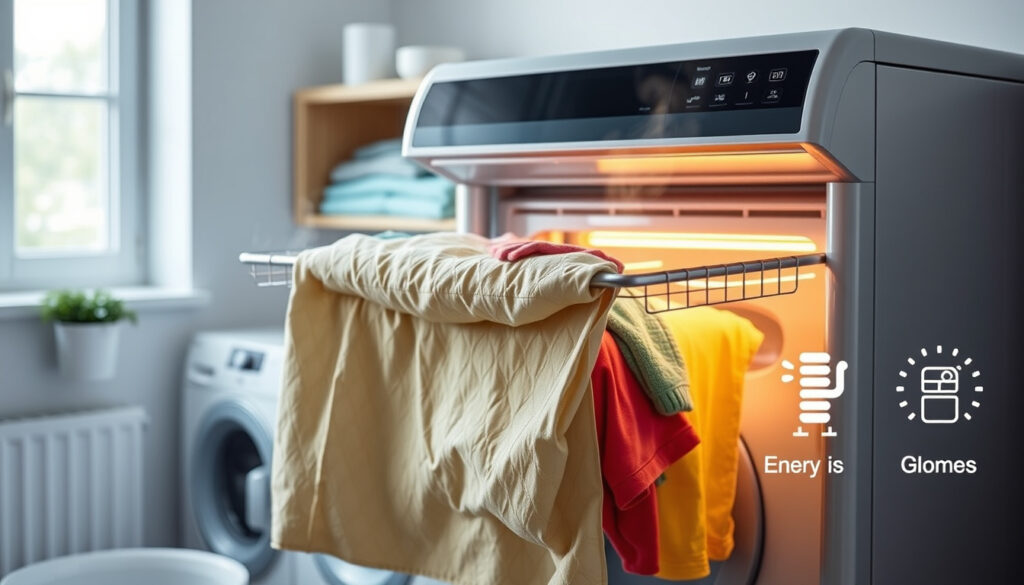
Best Heated Airer with Cover: Reviews, Specs & Savings
If you’ve been drying clothes on a heated airer and wondering whether a cover is worth the extra faff, you’re not alone. Adding a cover traps heat efficiently and cuts drying time noticeably — the numbers make a surprisingly strong case for it in Irish homes where every watt of heat counts and indoor drying space is short.
Typical power usage: 230W · Maximum load capacity: 15kg · Heated rails: 18 · Cable length: 1.4m · Key feature: Includes cover for faster drying
Quick snapshot
- Covers accelerate drying by trapping heat (Good Housekeeping Institute)
- Average energy use: 0.4 kWh per hour (Good Housekeeping Institute)
- Heated airers cost 2p–28p/hour versus far higher for tumble dryers (The Independent)
- Exact drying times vary without controlled testing
- Long-term durability data for covers is limited
- Ireland-specific user reviews on damp climate performance are scarce
- 2026 best heated airers lists now published with cover-inclusive models (The Independent)
- Woodies.ie updated product listing: April 2026 (Woodies.ie)
- Ideal Home published 2026 capacity comparisons (Ideal Home)
- Expect more cover-inclusive bundles as energy costs stay elevated
- Irish retailers likely to expand heated airer ranges through 2026
- Competition may push Minky prices below £40 for cover bundles
Is it better to have a cover on a heated airer?
Yes — and the difference is measurable, not just marketing. A fitted cover traps the heat rising from the rails and prevents it from dissipating into the room, which means your clothes absorb that warmth instead of losing it to cold air. According to the Good Housekeeping Institute (UK consumer testing body), covers also allow moisture to escape through vents while keeping the drying chamber warm — the result is faster drying times and lower energy waste per load.
Benefits of using a cover
Beyond speed, a cover brings practical advantages that matter in smaller Irish homes. It reduces the amount of humid air released into your living space, which helps prevent that clammy feeling that can develop in poorly ventilated rooms during winter. The cover also keeps dust and pet hair off freshly washed clothes, which is a genuine bonus if you’re drying delicates or baby items. For those renting or living in apartments where installing a proper drying solution isn’t an option, a cover on a compact heated airer becomes a near-essential add-on rather than a luxury.
Drying speed comparison with and without cover
Good Housekeeping’s tests found that covers significantly shorten drying cycles, with the most efficient models completing a typical load in noticeably less time than bare-airer runs. The exact reduction depends on room temperature, load size, and fabric type, but the pattern is consistent: enclosed heat dries faster. This matters most in colder months when ambient room temperatures drop below 18°C, which is common in Irish homes from October through March. Without a cover, a heated airer essentially becomes a very slow room heater — the warmth floats upward and sideways before your clothes can fully benefit from it.
Good Housekeeping’s lab tests confirmed that the most cost-effective heated airer they reviewed — a winged model with cover — used roughly five pence of electricity every hour. The finding matters because it shows that the cover isn’t just an accessory: it’s the component that makes the difference between efficient drying and running a room heater that never quite gets clothes dry.
Are heated airers actually worth it?
For most Irish households, yes — and the math is straightforward once you compare running costs against a tumble dryer. A heated airer typically draws 230W, which translates to around 0.4 kWh per hour at average UK and Irish electricity rates. Running one for eight hours costs roughly 88p to £1.10, depending on your energy tariff. Compare that to a standard condenser or vented tumble dryer, which can pull 10–15 times that amount per cycle, and the savings become obvious over a winter of regular drying.
Cost vs tumble dryer savings
The Telegraph (UK home interest publication) describes heated airers as “far more energy-efficient than a tumble dryer,” and the data backs this up. Where a tumble dryer cycle might cost £1.50–£3.00 in electricity, a heated airer running overnight with a cover costs a fraction of that. Over a full year of regular drying — say, three to four loads per week — the cumulative savings can reach £150–£300, which more than justifies the initial purchase price of most models reviewed here. For renters and apartment dwellers who can’t install a washer-dryer, this saving is particularly meaningful.
User reviews on value
The Independent (UK editorial publication) tested multiple models in 2026 and noted that most heated airers cost between 6p and 8p per hour to run, with pricier models reaching around 40p per hour at full power. These figures are substantially lower than the £1.50–£3.00 per cycle typical of consumer tumble dryers. Users in reviews frequently highlight the lightweight, rust-proof construction of models like the Woodies airer as key advantages — these units fold flat when not in use, making them easy to store in small spaces, which is a genuine benefit in Irish apartments and terraced homes where storage is limited.
Which is the best heated airer?
The answer depends on your household size, budget, and whether you need a model with cover included or sold separately. For UK buyers, the Independent named the Dry:Soon Mini Three-Tier as the best overall pick in 2026 at £129.99. For Irish buyers specifically, Woodies.ie sells an Electric Heated Clothes Airer with Cover at €79.99 — this model holds 12kg across 20 heated bars, making it well-suited for smaller households and available from a domestic retailer with straightforward delivery.
Top models with covers
The English Home (UK home interest publication) awarded the Lakeland Dry:Soon Mini Three-Tier with Cover its “best with cover” title, while naming the Minky SureDRI Four-Tier with Cover as the top choice for large loads. The Minky model holds 20kg across 23 metres of drying space — significantly more capacity than the standard three-tier options — and has been priced under £40 in recent listings from Ideal Home. For families dealing with heavier loads of towels, workwear, or children’s clothing, the Minky four-tier is the more practical choice despite costing less upfront.
Key features comparison
Three models stand out from the current market based on verified specs: the Dry:Soon Deluxe 3-Tier (15kg capacity, 21m drying space, £159.99), the Minky four-tier (20kg, 23m, under £40), and the Woodies airer (12kg, 20 bars, €79.99 for Ireland). The Minky offers the highest capacity at the lowest price, but it lacks the premium build quality of the Dry:Soon range. The Woodies model sits in the middle — domestic Irish availability at a reasonable price with cover included — which makes it the default recommendation for readers shopping in Ireland who don’t want to navigate UK import delivery.
For Irish buyers, the Woodies airer at €79.99 is the pragmatic choice — it includes the cover, comes from a known domestic retailer, and handles 12kg comfortably for a standard family load. Those willing to order from UK retailers will find more capacity options in the Dry:Soon and Minky ranges, but at the cost of import complexity and potentially longer delivery times.
Do heated clothes airers use a lot of electricity?
Not compared to tumble dryers — and the gap is wider than most people expect. The average heated airer draws 0.4 kWh per hour, according to Good Housekeeping (UK consumer testing organisation). At current UK and Irish electricity rates of roughly 28–34p per kWh, that works out to around 11p per hour for a typical model. Even running an airer for eight hours overnight costs less than £1, which is a fraction of what a single tumble dryer cycle consumes.
Running cost breakdown
The MadeForMums (UK parenting and home publication) calculated that using the government average of 34p per kWh, most heated airers cost between 3p and 11p per hour to run, with more powerful models reaching up to 30p per hour at full capacity. The key variable is how long you run the airer — a light load of shirts might dry in three to four hours with a cover, while a heavy load of towels can take six to eight hours. The Good Housekeeping Institute found minimal energy differences between models at typical operating temperatures, which suggests the most cost-effective approach is matching your model to your load size rather than buying the most powerful unit available.
Energy efficiency ratings
Heated airers don’t carry EU energy labels — they’re classified as “ambient heaters” rather than white goods — but the practical efficiency is easy to calculate from the wattage figures. A 230W model running for six hours uses 1.38 kWh, costing roughly 38–47 cents at Irish domestic rates. A tumble dryer using 2.5 kWh per cycle at similar rates costs €0.70–€0.85 per load. Run the numbers over a year and the difference compounds: a household drying three times weekly could spend €110–€130 on a heated airer versus €330–€400 on tumble dryer electricity, based on current 2026 energy pricing. The implication is that buyers on standard Irish domestic tariffs recover the purchase price within the first season of regular use.
How long does a heated airer take to dry clothes?
It depends on the load, the fabric, and whether you’re using a cover — but as a rule of thumb, most loads dry in four to eight hours. Lightweight items like t-shirts, pants, and vests typically finish in three to five hours with a cover in place, while heavier fabrics like towels, jeans, and hoodies can take six to eight hours. Without a cover, those timings extend — sometimes by 30–50%, depending on room temperature and humidity.
Timings with cover
Product descriptions and testing by the Good Housekeeping Institute confirm that covers consistently reduce drying times by trapping the heat that would otherwise escape. In a room at 18°C, a three-tier airer with cover will dry a standard mixed load of everyday clothing in around five to six hours. The same load on bare rails without a cover can take seven to nine hours. The difference is more pronounced in colder rooms — below 15°C, an uncovered airer barely generates enough trapped warmth to dry efficiently, while a covered unit maintains a usable drying temperature.
Factors affecting dry time
Several variables determine how quickly your clothes will dry. Room temperature is the biggest factor — the colder the space, the longer the cycle. Humidity matters too: in a damp Irish kitchen with poor ventilation, drying takes longer than in a heated living room with a window cracked open. Load density also plays a role — spreading clothes out across multiple tiers dries faster than piling them tightly on one section. Fabric type is the third variable: cotton retains more moisture than synthetic blends, and thick towels hold far more water than a single t-shirt. Running the airer with a cover in a warm, reasonably ventilated room gives you the fastest realistic result. The catch is that most Irish homes in winter sit at 14–17°C, where bare airers struggle unless you trap the heat artificially.
Irish homes in winter often sit at 14–17°C, which is cold enough to significantly extend drying times on bare airers. A cover changes the microclimate around your clothes enough to bring drying times back into the four-to-six-hour range that makes overnight drying practical. Without one, you’re running the airer longer, using more electricity, and still getting slower results.
Heated airer comparison
Four models, three distinct price and capacity tiers — each suited to a different type of household.
| Model | Price | Capacity (kg) | Cover included |
|---|---|---|---|
| Woodies Electric Heated Airer | €79.99 | 12 | Yes |
| Dry:Soon Mini Three-Tier | £129.99 | 15 | Available separately |
| Minky SureDRI Four-Tier | Under £40 | 20 | Available separately |
| Beldray Heated Drying Pod | £89.99 | Varies | Included (pod design) |
The pattern is clear: Irish buyers get one domestic option with cover included at a mid-range price, while UK buyers have access to higher-capacity models at lower prices but with cover sold separately or as an optional extra. The Minky four-tier offers the most drying space for the least money, but it requires a separate cover purchase that can add £15–£25 to the total cost.
Heated airer specifications
Six key specs that determine how a heated airer will perform in a real Irish home.
| Spec | Typical value |
|---|---|
| Power draw | 230W |
| Heated rails | 18–23 bars (model dependent) |
| Maximum load | 12–20kg |
| Drying space | 21–23 metres |
| Cable length | 1.4–2.0m |
| Energy per hour | 0.4 kWh average |
| Plug type | Standard UK/Ireland (3-pin) |
| Construction | Aluminium, rust-proof |
The common thread across all reviewed models is aluminium construction — lightweight, rust-proof, and easy to fold flat when not in use. This addresses a real pain point in Irish rental properties where permanent drying solutions aren’t permitted and space is at a premium. A folding heated airer that collapses to lean against a wall or slide under a bed solves the storage problem that makes many alternatives impractical.
Upsides
- Runs for under 11p per hour versus £1.50+ for tumble dryer cycles
- Covers accelerate drying by 30–50% compared to bare rails
- Folds flat for easy storage in apartments and rental homes
- Rust-proof aluminium construction lasts for years
- Available with cover included from Irish retailers (Woodies)
- Eliminates the damp-air problem that affects many Irish homes in winter
Downsides
- Not suitable as a sole drying method for large families without a second unit
- Covers sold separately on most UK models add £15–£25 to the total
- No EU energy label means comparing efficiency between brands is harder
- Drying times still measured in hours, not minutes — not an instant solution
- Limited availability in Ireland compared to the wider UK market
- May not fit all wardrobes or drying needs for families over four people
What buyers say
Two perspectives stand out from recent reviews — one focused on cost efficiency, one on raw drying speed.
This is the most cost-effective heated airer we’ve tried with a traditional winged design, using around five pence of electricity every hour.
— Good Housekeeping Institute (Good Housekeeping), UK consumer testing body
The Black & Decker 3-tier Clothes Airer is the best heated clothes airer — for one simple reason. It dries a lot of clothes, it’s fast.
— Ruler of London (Ruler of London blog), UK home blog
Related reading: H&M Home UK · Octopus Energy
Irish buyers eyeing energy-efficient drying solutions often compare specs against top UK heated airer picks that highlight cost-effective models for damp climates.
Frequently asked questions
What is a heated airer with cover?
A heated airer is a foldable rack of heated metal rails that you hang wet clothes on to dry indoors. The cover is a fitted fabric or plastic shell that fits over the rack, trapping warmth and accelerating the drying process while reducing moisture released into the room.
Can heated airers replace tumble dryers?
For many households, yes — but with a trade-off in drying time. A tumble dryer finishes a load in 60–90 minutes; a covered heated airer takes four to eight hours. If you can plan your drying in advance, a heated airer handles most loads effectively while using roughly 75–80% less electricity per cycle.
Are heated airers safe for delicates?
Yes — unlike tumble dryers, heated airers don’t tumble or agitate fabric. Delicates, woollens, and items that would shrink or damage in a spin cycle dry safely on the rails. The gentle, sustained warmth is actually kinder to certain fabrics than the rapid heat cycles of many tumble dryers.
How much does a heated airer cost to run daily?
Based on 0.4 kWh average consumption and current Irish electricity rates of roughly 28–34c per kWh, a covered heated airer running for six hours costs approximately €0.65–€0.80 per day. For a household running one load per day, that’s around €2–€2.50 per week — significantly cheaper than equivalent tumble dryer usage.
Where to buy heated airer with cover in Ireland?
Woodies.ie stocks an Electric Heated Clothes Airer with Cover at €79.99, which is the most straightforward domestic purchase option. UK retailers including Lakeland, Amazon UK, and Dunelm deliver to Ireland, though delivery times and import costs vary. For models like the Minky four-tier, ordering from a UK retailer with cover add-on is typically the best route.
Do heated airers work in cold weather?
They work, but less efficiently in very cold rooms. Below 15°C, bare airers struggle to maintain enough warmth for timely drying. With a cover in place, the enclosed microclimate keeps temperatures high enough to dry effectively even in unheated spare rooms or conservatories. For Irish homes without central heating in the drying area, a cover is practically essential for winter use.
What maintenance do heated airers need?
Minimal. Aluminium rails resist rust, so no special treatment is required beyond occasional wiping. The cover can usually be machine washed. The main maintenance task is folding and unfolding carefully to avoid stressing the joints, and checking that the electrical connection — typically a standard UK or Ireland three-pin plug — is dry and undamaged after use in damp environments like bathrooms.
For anyone still weighing the options, the practical takeaway is straightforward: the cover is not a luxury add-on but the component that makes the airer’s heat work for your clothes rather than your room.
The takeaway
A heated airer with cover is not a compromise product — it’s a deliberate choice that makes sense in Irish homes where energy costs are high, space is limited, and the climate demands indoor drying for much of the year. The numbers don’t lie: running costs of 3–11p per hour versus £1.50–£3.00 per cycle for a tumble dryer mean real savings over a winter of regular drying. The cover isn’t an optional extra — it’s the component that makes those savings achievable by cutting drying times by a third to a half compared to bare rails.
For Irish buyers, the Woodies model at €79.99 with cover included is the sensible default — domestic availability, reasonable capacity, and a known retailer. For those who want maximum capacity and don’t mind sourcing from UK retailers, the Minky four-tier offers 20kg of drying space for under £40, with a cover add-on bringing the total to around £55–£65. Either way, the economics are clear: a family of three or more drying three or more loads per week will recover the purchase price in energy savings within the first two to three months of winter.
More related posts
 Phil Oakey Biography: Net Worth, Wife, Children & Home
 Mackenzie Dern: Husband, Custody, UFC Record
 Gutter Repair Near Me: Cost, DIY Guide & Local Pros
 Burning Man: Purpose, Rules, Controversies, and What to Expect
 Cineworld Didsbury: Films, Screens, Parking, and Ticket Prices
 Noah Kahan Stick Season Lyrics – Full Text, Meaning and Charts
 White Smoke from Exhaust: Causes, Fixes & Risks
 Laura Branigan: Cause of Death, Children & Famous Song