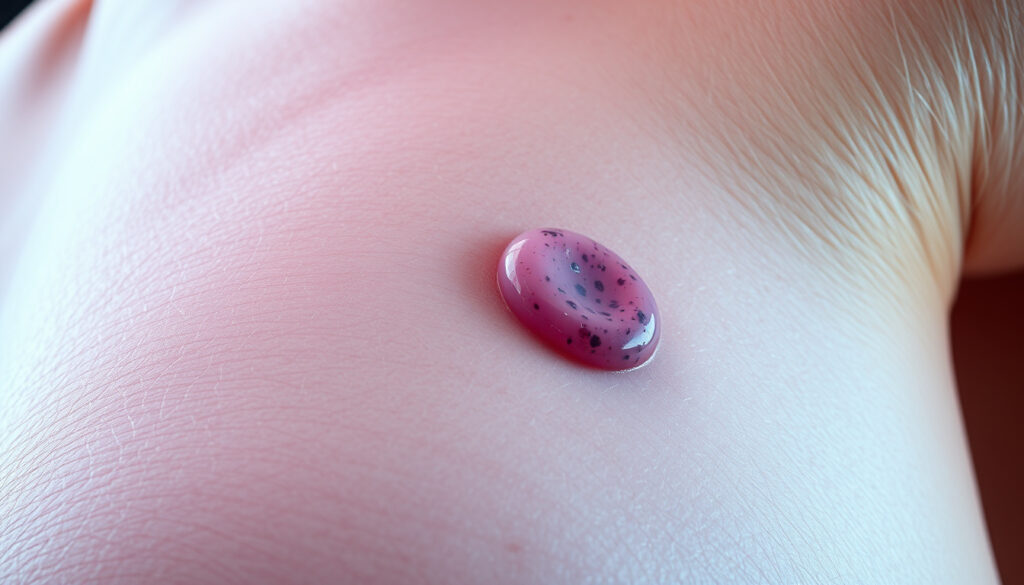
Real Pictures of Breast Cancer Lumps: Identification Guide
If you’ve found a lump in your breast or simply want to know what to look for, you’re in the right place. Most breast lumps turn out to be harmless—about 80% are benign—but recognizing what a cancerous lump looks and feels like can make a real difference when it comes to early detection. This guide walks through real imaging findings from ultrasound and mammogram scans, backed by medical sources, so you know exactly what features matter.
80% of breast lumps aren’t cancerous (WebMD) · Early detection via lumps is key indicator (CDC) · Mammograms distinguish cysts from lumps (Mayo Clinic)
Quick snapshot
- Cancers on ultrasound appear as hypoechoic masses (darker gray) relative to surrounding tissue (DenseBreast-info, Inc.)
- Malignant masses often have irregular shape and spiculated margins (DenseBreast-info, Inc.)
- Spiculation has 91.8% positive predictive value for malignancy (PMC – NIH)
- Whether pain level reliably indicates malignancy varies individually
- Visuals alone cannot provide a diagnosis—imaging must be paired with clinical evaluation
- Specific ISO dates for most study releases are not consistently available
- Breast ultrasound introduced in 1950s using radar techniques adapted from U.S. Navy (RSNA Journals)
- q-HDMI 3D microvessel imaging developed at Mayo Clinic in recent research (YouTube – Mayo Clinic q-HDMI)
- TCIA dataset released with 256 ultrasound scans from 256 patients (The Cancer Imaging Archive)
- Supplemental ultrasound in dense breasts finds cancer in 2-3 per 1,000 women after normal mammogram (DenseBreast-info, Inc.)
- More than 85% of cancers detected only on ultrasound are invasive, early stage, and node negative (DenseBreast-info, Inc.)
- BI-RADS category 5 indicates highly suspicious for cancer, recommending biopsy (Medical News Today)
| Feature | Typical Finding |
|---|---|
| Common Location | Upper outer quadrant |
| Pain Level | Usually none |
| Detection Tool | Self-exam + mammogram |
| Men Risk | 1% of cases |
| Ultrasound Appearance | Hypoechoic (darker gray) |
| Mammogram Appearance | Focused white areas |
| Benign Cyst | Anechoic (black), round/oval, sharp margins |
| Malignant | Irregular, spiculated margins |
| Calcifications | Best seen on mammography as white dots |
| BI-RADS 5 | Highly suspicious, biopsy recommended |
How does a cancerous breast lump look?
When imaging a suspicious breast lump, radiologists look for specific visual patterns that distinguish malignant growths from benign tissue.
Hard irregular shape
On ultrasound, cancerous lumps typically appear as hypoechoic masses—darker gray compared to the surrounding fat or fibroglandular tissue. Malignant lesions often have irregular shapes with indistinct or spiculated margins, meaning they lack the smooth edges seen in harmless lumps. Spiculation, the spiky radiating pattern at the edges of a mass, carries a 91.8% positive predictive value for malignancy. The taller-than-wide shape ratio, where the nodule grows more vertically than horizontally, also raises concern, carrying an 81.2% positive predictive value for malignancy. These features are not guesses—they come from analyzing thousands of real scans in clinical datasets.
Skin changes like dimpling
Beyond what shows on imaging, breast cancer can cause visible skin changes. Dimpling, where the skin pulls inward creating a slight indentation, may appear when a tumor tethers to Cooper’s ligaments. Inflammatory breast cancer presents with skin thickening, redness, and a texture resembling an orange peel (peau d’orange). These signs often accompany a mass that is fixed to underlying tissue rather than moving freely within the breast.
Armpit involvement
Breast cancer can spread to the lymph nodes in the armpit area, which may show up on imaging as enlarged, rounded nodes with disrupted architecture. A lump felt in the armpit—separate from the breast itself—should always be evaluated, as it could represent metastatic spread even before a primary breast tumor is detected. Men account for approximately 1% of breast cancer cases, and armpit involvement can be particularly telling in male patients who may not expect this diagnosis.
What does a cancerous breast lump normally feel like?
Feeling a lump raises immediate questions about whether it’s likely to be cancer. Understanding texture and mobility helps you communicate effectively with your healthcare provider.
Firm and rubbery texture
A cancerous breast lump typically feels firm or hard, unlike the soft, squishy texture of a cyst. According to Moffitt Cancer Center, malignant lumps often have a dense, rubbery consistency—almost like the feel of a raw carrot beneath the skin. This firmness comes from the densely packed, disorganized cell structure of invasive tumors.
Irregular edges
While you can’t see irregular edges through touch alone, you can feel that the boundary of a malignant lump is not clearly defined—it blends into surrounding tissue rather than having a smooth, round perimeter. Benign lumps like fibroadenomas typically have smooth, round borders and feel like a movable marble. Cancerous lumps tend to be more “stuck” in place.
Non-movable
Perhaps the most telling physical characteristic: a cancerous lump is often fixed to the underlying tissue and doesn’t roll easily under your fingers. Benign cysts and fibroadenomas, by contrast, tend to be mobile and separate from surrounding structures. When you press on a malignant mass, it stays put. This lack of movement occurs because cancer cells invade and anchor themselves to the surrounding tissue matrix.
Fibroadenomas—the most common benign lumps—peak in women aged 15–40, while cysts are most common in women aged 35–50. If you’re in these age ranges and feel a lump, there’s a good chance it’s harmless—but always get it checked.
Do cancer lumps hurt when pressed?
Pain is often the first thing people look for when assessing a lump, but it’s not a reliable indicator of whether something is cancerous.
Typically painless
The majority of cancerous breast lumps are painless. According to Moffitt Cancer Center, most malignant lumps cause no discomfort—a fact that surprises many patients. This is why self-examination focusing on texture and mobility matters more than waiting for pain as a warning sign.
Pain not reliable indicator
Relying on pain to detect cancer is a mistake. While advanced tumors may eventually cause discomfort, early-stage cancers almost never hurt. A painful lump is far more likely to be a cyst, a fibroadenoma, or mastitis (especially during breastfeeding) than cancer. Pain levels simply don’t correlate reliably with malignancy.
Cysts more tender
Fluid-filled cysts—which are benign—tend to be tender or painful, especially just before menstruation. American Cancer Society notes that breast pain alone is rarely a symptom of cancer. Cysts on ultrasound appear anechoic (black), round or oval, with sharp margins and posterior acoustic enhancement. They compress easily and feel softer than solid masses, which is why they’re more likely to cause discomfort when pressed.
If a lump hurts, it may actually be reassuring—but that doesn’t mean non-painful lumps are safe. The absence of pain is not a green light.
Can a mammogram tell if a lump is just a cyst?
Mammography is the frontline imaging tool for breast cancer screening, but it has limits when it comes to distinguishing certain types of lumps.
Ultrasound confirms cysts
While mammograms can identify masses and calcifications, they struggle to definitively characterize whether a mass is solid or fluid-filled. This is where ultrasound becomes essential. According to the Mayo Clinic, ultrasound is the preferred second-line tool when mammography finds an unclear mass because it clearly shows whether a lesion is anechoic (fluid-filled cyst) or hypoechoic (solid mass). Benign cysts appear as perfect black circles on ultrasound, while solid masses show internal echoes.
Mammo density issues
Dense breast tissue—which appears white on mammography—can obscure tumors that also appear white, creating a masking effect. DenseBreast-info, Inc. reports that ultrasound is unaffected by breast density, making it especially valuable for women with heterogeneously dense or extremely dense tissue. In women with dense breasts, a screening ultrasound after a normal mammogram finds cancer in 2–3 per 1,000 women.
Biopsy if unclear
When imaging findings are inconclusive, a biopsy is the next step. The BI-RADS classification system (developed by the American College of Radiology) categorizes findings from 0 (incomplete, needs further imaging) to 6 (known cancer). A BI-RADS 4 or 5 result means radiologists see features suspicious enough to recommend tissue sampling. The Cancer Imaging Archive dataset contains 266 segmented lesions from 256 patients—all confirmed by biopsy—demonstrating how imaging patterns correlate with actual pathology.
What is the biggest indicator of breast cancer?
If you had to prioritize one warning sign above all others, persistent lumps remain the strongest red flag—but they don’t stand alone.
Persistent lump
The CDC lists a persistent, painless lump as the most common sign of breast cancer. Unlike cysts that may come and go with your menstrual cycle, a cancerous mass won’t shrink or disappear over time. If a lump remains in the same location for more than 4–6 weeks, schedule a clinical evaluation. The upper outer quadrant of the breast is the most common location, though lumps can appear anywhere.
Nipple changes
Beyond lumps, watch for nipple changes: inversion (pulling inward when normally everted), discharge (especially if bloody), scaling, or crusting. Paget’s disease of the breast presents with eczema-like changes around the nipple and is often associated with underlying ductal carcinoma. These signs may appear subtle but deserve prompt attention.
Inflammatory signs
Inflammatory breast cancer (IBC) is aggressive and often missed on mammography because it may not form a distinct lump. Instead, it presents with rapid onset of breast swelling, redness covering at least one-third of the breast, and peau d’orange (skin dimpling). The IBC Network emphasizes that early IBC pictures typically show skin changes before a mass is palpable. If your breast suddenly looks red and swollen without infection, seek immediate care.
Microcalcifications—the tiny white dots that represent the earliest stage of breast cancer—are best seen on mammography and often invisible on ultrasound. Conversely, solid masses show up clearly on ultrasound but may be masked by dense tissue on mammograms. Each imaging tool has blind spots the other covers.
Visual characteristics: ultrasound vs mammogram
Understanding how breast cancer appears on different imaging modalities helps you make sense of reports and discussions with your radiology team.
| Feature | Ultrasound Appearance | Mammogram Appearance |
|---|---|---|
| Cancerous mass | Hypoechoic (darker gray), irregular shape | Focused white area or mass |
| Benign cyst | Anechoic (black), round/oval, sharp margins | May appear as well-circumscribed mass |
| Margins | Spiculated, indistinct, angular borders | Architectural distortion visible |
| Calcifications | Often not visible | White dots, clusters, or linear patterns |
| Microvessels (3D) | Curved and jumbled in malignant tissue | Not visible |
| Breast density effect | Unaffected | Masked in dense tissue |
Mammography excels at detecting microcalcifications, which represent the earliest stage of some breast cancers (ductal carcinoma in situ, or DCIS). Drs. Debra Ikeda and Jafi Lipson, Stanford radiologists, note that “mammography is fantastic at identifying little tiny white dots on a mammogram, which represent calcifications, the earliest stage of breast cancer.” Ultrasound, meanwhile, characterizes solid masses and reveals internal blood flow patterns that help differentiate benign from malignant lesions.
Confirmed vs uncertain: what we know for certain
A clear-eyed look at what medical imaging research confirms and what remains ambiguous.
Confirmed facts
- Ultrasound shows cancerous lumps as hypoechoic masses with irregular shapes
- Malignant margins are spiculated or indistinct (not smooth)
- Spiculation carries 91.8% positive predictive value for malignancy
- Benign cysts appear as anechoic (black) circles on ultrasound
- Combined ultrasound and mammography have near 100% negative predictive value for palpable lesions
- Ultrasound introduced in 1950s using Navy radar techniques
What’s unclear
- Pain levels vary individually and don’t reliably indicate cancer
- Visuals alone cannot diagnose—clinical context is essential
- Some study release dates not consistently documented
- Regional screening guideline variations exist but aren’t fully standardized
What experts say
“Microvessels in a malignant breast cancer mass look curved and jumbled together whereas benign breast tissue microvessels appear straight and separated.”
— Mayo Clinic researchers (YouTube – Mayo Clinic q-HDMI)
“Mammography is fantastic at identifying little tiny white dots on a mammogram, which represent calcifications, the earliest stage of breast cancer.”
— Dr. Debra Ikeda and Dr. Jafi Lipson, Stanford radiologists (Stanford YouTube)
“More than 85% of cancers seen only on ultrasound are invasive, early stage, and node negative.”
— DenseBreast-info, Inc. (DenseBreast-info)
Related reading: Tori Allen-Martin – Martin Lewis Wife Terminal Cancer Timeline
uclahealth.org, radiologyassistant.nl, breastcancerfoundation.org.nz, healthline.com
While pictures provide visual cues, grasping how actual lumps look and feel empowers better self-detection and timely medical consultation.
Frequently asked questions
How does your body feel if you have breast cancer?
Early breast cancer often causes no obvious symptoms, which is why screening matters. When symptoms do appear, they may include a persistent lump, skin dimpling, nipple changes, or unexplained pain that doesn’t cycle with your period. Advanced disease may cause fatigue, unexplained weight loss, or bone pain if spread has occurred.
Where is breast cancer pain usually felt?
Breast cancer pain is usually felt in the breast itself, though it may radiate to the chest wall, axilla (armpit), or shoulder. Pain is rarely the primary symptom of early cancer—most malignant lumps are painless. Persistent pain in one location, especially if accompanied by other changes, warrants evaluation.
What are the most ignored cancer symptoms?
The most overlooked signs include a lump that doesn’t hurt, subtle skin changes like dimpling or redness, nipple discharge without breastfeeding, and unexplained weight loss. People often dismiss a painless lump as harmless because they expect cancer to hurt—wrongly so.
What does a breast cancer lump in armpit look like?
An armpit lump from breast cancer represents swollen lymph nodes that have been infiltrated by cancer cells. On ultrasound, these nodes lose their normal fatty hilum (the center stripe) and become rounded with disrupted architecture. This may appear before, alongside, or after a primary breast tumor is detected.
Are breast cancer lumps visible on ultrasound?
Yes, breast cancer lumps are clearly visible on ultrasound as hypoechoic (darker than surrounding tissue) masses with irregular shapes and margins. Benign cysts appear as anechoic (black) circles. Ultrasound is so effective at characterizing masses that combined ultrasound and mammography achieve near 100% negative predictive value for palpable lesions.
What do early inflammatory breast cancer pictures show?
Early inflammatory breast cancer images typically show skin thickening, redness covering at least one-third of the breast, and peau d’orange (dimpled skin resembling an orange peel). Unlike other breast cancers, IBC may not form a distinct lump on imaging—making it harder to catch and more aggressive.
Can men get breast cancer lumps?
Yes, men account for approximately 1% of breast cancer cases. Male breast cancer often presents as a painless lump behind the nipple, sometimes with nipple discharge or inversion. Risk factors include BRCA2 mutations, Klinefelter syndrome, and estrogen exposure. Any persistent chest lump in men deserves clinical evaluation.
More related posts
 Ayden Heaven: Transfer, Salary, Height, and Why He Left Arsenal
 Leah Ray: Age, Real Name, Height, Ethnicity, and More
 Call of Duty Black Ops 6 – Release Date Platforms Features
 Tamer Hassan: Ethnicity, Net Worth, Wife, and Career – Biography
 Love and Roses Dresses – Sizes, Reviews, Where to Buy
 Free AI Video Generator: Best Tools Without Watermarks
 Alysa Liu: Olympic Champion, Biography & Chinese Heritage
 UK Weather Warning Thunderstorms: No Met Office Alerts