What Is the Independent Variable? Definition & Examples
If you’ve ever sat through a science class wondering which part of an experiment actually matters, you’re not alone. Variables are the building blocks of any scientific study, and knowing how to tell them apart can transform confusion into genuine understanding. In this guide, you’ll find a clear definition of the independent variable, see how it contrasts with its dependent counterpart, and walk through real examples from chemistry, biology, and psychology. By the end, you’ll be spotting these roles in experiments like a trained researcher.
Manipulated by researcher: Stands alone and changed intentionally (NCES) ·
Opposite of dependent variable: Outcome measured in experiments (Wikipedia) ·
Set by experimenter: Acts on dependent variable (Indeed) ·
Example in study: Gender identity of participants (Scribbr)
Quick snapshot
- Manipulated by experimenter (Ranger College Library)
- Stands alone without being changed by other variables (Simply Psychology)
- Science experiments (Variables in Science Video)
- Research studies (Simply Psychology)
- Temperature in photosynthesis studies (Science Ready)
- Drug dosage in clinical trials (Ranger College Library)
The table below consolidates essential facts about the independent variable, from its primary role in experiments to its visual representation on graphs.
| Label | Value |
|---|---|
| Primary role | Variable changed by researcher (Ranger College Library) |
| Not affected by | Other measured variables (NCES) |
| Typical example | Gender in participant studies (Scribbr) |
| In graphs | Often x-axis (Scribbr) |
| Cause vs Effect | Cause (Scribbr) |
| Temporal order | Set or measured first (Lumivero) |
What is an independent variable?
The independent variable is the factor that a researcher deliberately changes or controls in an experiment to observe how it affects other variables. According to the Ranger College Library (educational resource on scientific methodology), it stands alone and is not influenced by the other variables being measured. This makes it the presumed cause in a cause-and-effect relationship.
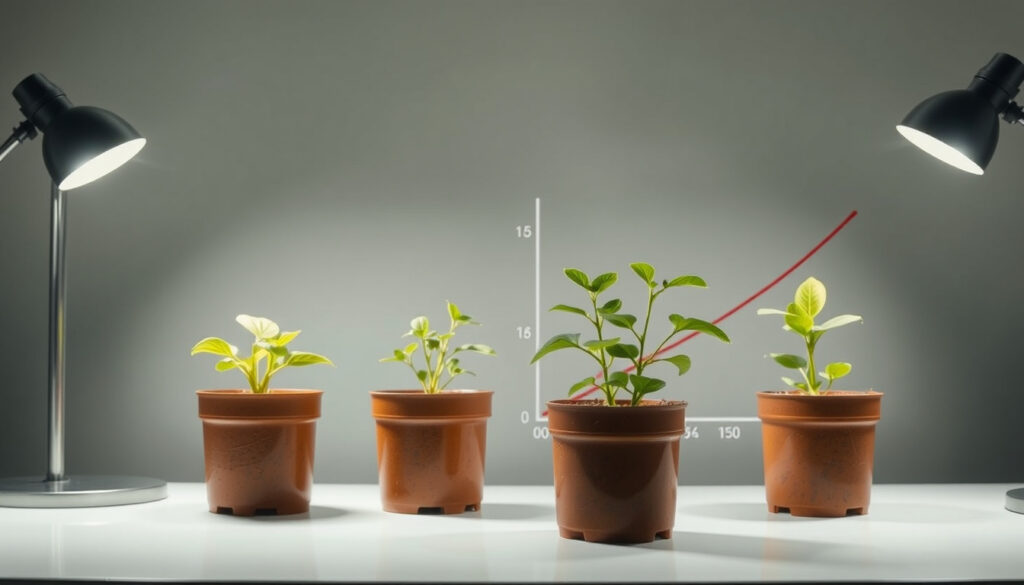
In practice, the independent variable is what the experimenter manipulates across different conditions or groups. If you’re testing how sunlight affects plant growth, the amount of sunlight is your independent variable. The key characteristic is that you set it, measure it, or introduce it before observing the outcome.
The implication: understanding this distinction between what you control and what you measure separates scientific thinking from casual observation.
How does it differ from other variables?
Unlike the dependent variable, which responds to changes, the independent variable remains stable and unaffected by other variables during the experiment. The USC LibGuides (academic writing resource for research papers) describe it as a factor that is systematically manipulated to test specific hypotheses.
- Independent variable: You control it — the cause you test
- Dependent variable: You measure it — the effect you observe
- Controlled variables: You keep them constant — to isolate the effect of the independent variable
Role in experiments
Good experiments maintain only one independent variable per study, as emphasized by Study.com (educational platform for science students). This isolation allows researchers to be confident that any changes in the dependent variable are caused by the independent variable alone. When multiple independent variables are introduced, it becomes difficult to determine which change produced which effect.
Researchers keep all other factors constant so that the independent variable is the only thing that changes. This is how scientists prove causation rather than mere correlation.
What is the difference between dependent and independent variables?
The independent variable is the cause — the factor you manipulate or select first. The dependent variable is the effect — the outcome you measure afterward. This temporal ordering is fundamental to experimental design, as explained by Lumivero (research methodology blog).
In a drug study, for example, the dose administered is the independent variable, while symptom frequency or intensity measured afterward is the dependent variable. The direction of causality always flows from independent to dependent.
Defining the dependent variable
The dependent variable depends on the independent variable — it changes in response to whatever manipulation you apply. According to Scribbr (academic writing and methodology guide), the dependent variable is the effect you observe and record. In a graph, it typically appears on the y-axis.
Key distinctions in practice
In experimental studies, the researcher actively manipulates the independent variable. In observational studies, however, the independent variable is typically a pre-existing trait that cannot be ethically or practically manipulated, such as age, gender, or income level, as noted by Simply Psychology (psychology education resource).
Observational studies can identify correlations but cannot prove causation the way experiments can, because the independent variable wasn’t under the researcher’s control.
What is the independent variable in the experiment?
When designing an experiment, identifying the independent variable means asking: “What am I changing on purpose to see what happens?” The answer points to your independent variable. The Ranger College Library (scientific methodology resource) illustrates this with a rudder position study — the rudder position is independent because the experimenter adjusts it, while the boat trajectory is dependent because it’s measured as an outcome.
In a photosynthesis experiment, the temperature set by the researcher is the independent variable, and the photosynthesis rate measured afterward is the dependent variable. The Science Ready educational resource (Australian science education platform) uses this exact example to teach students how to identify variable roles.
Identifying it in studies
A common mistake is treating post-treatment measures as independent variables, according to Lumivero (research blog specializing in methodology). Always check the temporal order: whatever is set, measured, or manipulated first is your independent variable. Any variable recorded after the experiment begins that reflects an outcome is dependent.
Examples from science
Study.com (K-12 educational platform) provides clear examples for students:
- In a handwashing experiment, the type of soap is independent; germs killed is dependent
- In a mint experiment, the amount of mints is independent; water temperature change is dependent
- In a plant study, fertilizer amount is independent; plant height or weight is dependent
What are examples of independent variables?
Independent variables appear across every scientific discipline. In biology, vitamins given to squids in a lifespan study serve as the independent variable, with squid longevity as the measured outcome, according to the Variables in Science educational video. In clinical research, medication dosage is the classic independent variable, while patient health outcomes are dependent, as documented by the Ranger College Library (scientific methodology guide).
The Simplicable science resource (educational blog) lists eleven concrete examples including fertilizer amount, medication versus placebo, and study hours versus test scores. This variety shows that independent variables can be numerical quantities, categorical treatments, or participant characteristics.
Simple everyday examples
You encounter independent variables in daily life more often than you might realize:
- Hours studied before an exam (independent) versus exam score (dependent)
- Caffeine consumed (independent) versus alertness measured (dependent)
- Price of a product (independent) versus demand for that product (dependent)
5 specific cases
Study.com (educational platform for students) emphasizes five well-documented cases for classroom learning:
- Temperature in a chemical reaction — independent; reaction rate — dependent
- Amount of fertilizer — independent; crop yield — dependent
- Type of diet — independent; weight change — dependent
- Hours of sleep — independent; cognitive test performance — dependent
- Exercise frequency — independent; heart health markers — dependent
When reading research, ask yourself: “What did the researcher change?” That factor is almost certainly the independent variable. If it’s unclear, the study may not be a true experiment.
What is a control variable?
Control variables are factors kept constant throughout an experiment to ensure that any changes in the dependent variable can be attributed to the independent variable alone. The Variables in Science educational video (YouTube science channel) stresses that controlled variables like temperature, food type, and water quality must be kept constant to isolate independent variable effects.
Without control variables, confounding factors could produce the observed effects, undermining the entire study. The Science Sparks educational blog (UK-based science activity resource) notes that good experiments maintain constant conditions across all groups so that only the independent variable differs.
How it relates to independent
The independent variable changes across conditions, while controlled variables stay the same. This contrast is what allows researchers to isolate cause-and-effect relationships. For example, if testing how sunlight affects plant growth, sunlight is independent (changed between groups) while soil type, water amount, and pot size are controlled (kept identical).
Understanding the difference between independent and control variables helps you grasp how variables work together in scientific research.
Role in fair testing
Fair testing requires that only the independent variable differs between test groups, as emphasized by the Ranger College Library (scientific methodology resource). Any variable that could influence the dependent variable must be identified and controlled before the experiment begins.
When designing experiments, researchers apply precise measurement principles to ensure their control variables remain consistent throughout the study period.
Overlooking a control variable can invalidate an entire experiment. For instance, testing medication effectiveness while allowing participants to use supplements introduces an uncontrolled variable that could affect the outcome independently of the medication dose.
The pattern: even small oversights in controlling variables can derail an experiment’s validity, making replication of results impossible.
study.com, simplicable.com, libguides.usc.edu, youtube.com, masterclass.com
Researchers manipulate the independent variable to measure its impact on the dependent variable, which reveals the experiment’s outcomes in scientific studies.
Frequently asked questions
What is the independent variable in research?
In research, the independent variable is the factor that researchers manipulate, select, or measure first to observe its effect on a dependent variable. It serves as the presumed cause in a cause-and-effect relationship, according to the Simply Psychology methodology guide.
What is the independent variable in psychology?
In psychology experiments, the independent variable could be exposure to a stimulus, duration of a task, or administration of a treatment. Participant characteristics like gender identity or age can also serve as independent variables in observational psychology research.
What is the independent variable in science?
In science, the independent variable is the factor changed by the experimenter to test a hypothesis. Common examples include temperature, chemical concentration, time duration, or amount of a substance, as documented across science education resources.
What is the independent variable x or y?
In graphs, the independent variable is typically placed on the x-axis (horizontal) and the dependent variable on the y-axis (vertical). A simple way to remember: x comes before y in the alphabet, just as the independent variable comes before the dependent variable in experimental sequence.
Which is the dependent variable?
The dependent variable is the outcome measured after the independent variable is set or changed. It depends on the independent variable and reflects the effect you’re studying. In a plant growth experiment, plant height is the dependent variable.
What is the independent variable GCSE?
GCSE (General Certificate of Secondary Education) science curricula in the UK define the independent variable as the variable changed by the experimenter. Students are taught to identify it as the factor being tested and to keep all other variables controlled.
What is an example of an independent variable?
In a drug dose study, the dosage amount is the independent variable. In a plant experiment, the amount of fertilizer is independent. In an educational study, hours of revision is independent. In each case, the researcher deliberately sets or changes this factor to observe its effect on the dependent variable.
An independent variable is exactly what it sounds like. It stands alone.
— National Center for Education Statistics (NCES) educational resource
A variable is considered dependent if it depends on an independent variable.
— Wikipedia (Collaborative Encyclopedia, Scientific Methods Entry)
The independent variable is the cause you manipulate, and the dependent variable is the effect you observe.
— Simply Psychology (Psychology Education Resource)
A good experiment only has one independent variable so that the experimenter can be sure that changes to the dependent variable are caused by the independent variable.
— Study.com (K-12 Educational Platform)
For students designing their first experiments, the path forward is straightforward: identify one factor to change, keep everything else constant, measure the outcome, and you have a valid experimental design. The independent variable is the hinge on which the entire method turns.
When students master the independent variable concept, they gain the ability to design experiments that produce trustworthy, reproducible results others can build upon.
More related posts
 Joe Sugg: YouTube Star, Net Worth, and Baby With Buswell
 Octopus Energy Telephone Number – Official Lines and Hours
 Barry Keoghan and Sabrina Carpenter: Breakup, Timeline & Cheating Rumors
 Bereavement Leave Ireland: Days, Pay, and Rules Explained
 Cast of Gotham (TV Series) – Full List of Actors and Characters
 Charlene White: Partner, Poppy Controversy, Career & Latest News
 Best Heated Airer with Cover: Reviews, Specs & Savings
 Rag N Bone Man – Age, Real Name, Songs and Full Bio