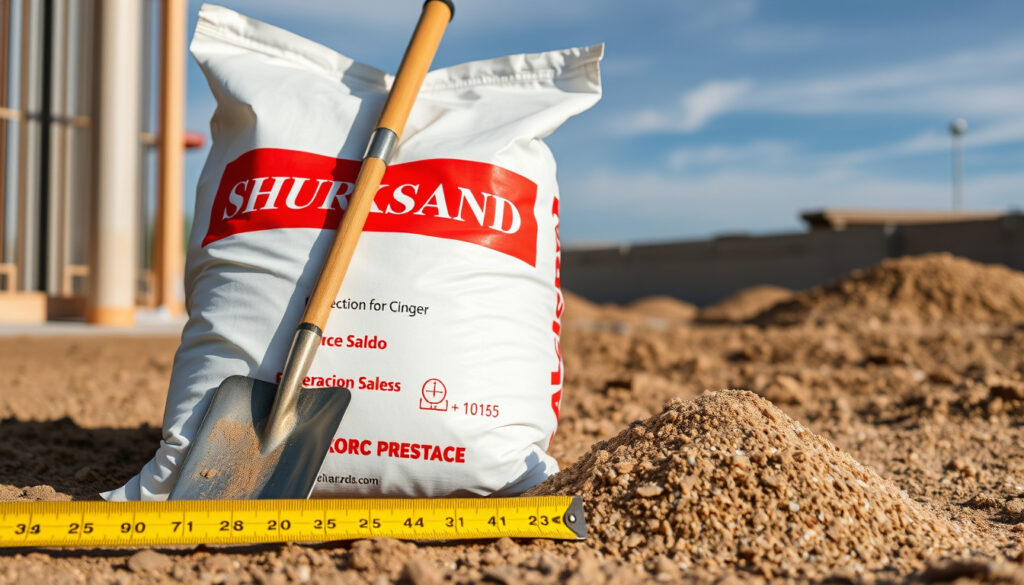
Sharp Sand Bulk Bag: Coverage, Cost & Mixing Ratios
If you’re planning a concrete slab, a patio base, or a block wall, one question usually comes first: how much sharp sand do I actually need? A bulk bag is the most cost-effective way to buy, but the numbers around coverage, cost, and mixing can feel fuzzy. This guide pulls together real Irish and UK supplier data so you can order with confidence — no guesswork, no wasted trips to the builders’ merchant.
Typical bulk bag weight: 850–900 kg ·
Coverage at 50 mm depth: 10–15 m² ·
Average price per bag (Ireland): €60–€80 ·
Standard cement mix ratio: 4:2:1 (gravel:sharp sand:cement) ·
Number of 25 kg bags per bulk bag: 34–36
Quick snapshot
- ~10–15 m² at 50 mm depth per bulk bag (Concretemath.co.uk trade calculator)
- Use depth formula: area (m²) = 0.5 m³ / depth (m) (Concretemath.co.uk trade calculator)
- Calculate by dividing bag volume by required depth (Concretemath.co.uk trade calculator)
- Bulk bag: €60–€80 (IE), £40–£60 (UK) (TJ O’Mahony Irish builders’ merchant)
- Delivery fees vary; often free over €299 (Country Supplies UK aggregate supplier)
- Compare per‑kg price with small bags (TJ O’Mahony Irish builders’ merchant)
- Concrete: 4 gravel : 2 sharp sand : 1 cement (Irish Building Supply IE building materials retailer)
- Mortar: 4 sharp sand : 1 cement (Irish Building Supply IE building materials retailer)
- 1 bulk bag needs ~6–8 bags of cement (Irish Building Supply IE building materials retailer)
- Builder’s sand: wrong for concrete (Concretemath.co.uk construction materials guide)
- Washed sharp sand: cleaner, for rendering (Concretemath.co.uk construction materials guide)
- Kiln‑dried sand: for jointing (Concretemath.co.uk construction materials guide)
| Attribute | Value |
|---|---|
| Bulk bag weight | 850–900 kg (typically ~0.5 m³) |
| Coverage at 50 mm depth | 10–15 m² |
| Price range (Ireland) | €60–€80 per bag |
| Cement needed per bag | 6–8 bags (25 kg) for concrete |
| Number of 25 kg bags in a bulk bag | 34–36 |
How much does a bulk bag of sharp sand cover?
Coverage depends on depth. A single bulk bag — weighing 850–900 kg and measuring about 0.5 m³ — will cover roughly 10–15 m² when spread 50 mm thick, according to the Concretemath.co.uk trade calculator. Double the depth, halve the area; halve the depth, double the area. Simple geometry.
At a 25 mm paving bed depth, that same bag covers about 22 m². For a 20 m² patio at 50 mm depth, you’ll need about 1.5 bulk bags. Always order slightly more — compaction and uneven ground eat into the theoretical area.
Coverage by depth – quick reference
Three depths, one pattern: shallower beds go further, deeper foundations need more sand.
| Depth (mm) | Approx. coverage from 1 bulk bag (m²) |
|---|---|
| 25 mm | ~22 m² |
| 50 mm | ~11 m² |
| 75 mm | ~7.3 m² |
What this means: One bulk bag handles a small patio or a garden path. For a driveway or larger area, budget for two or more bags, and always measure your area before you order.
How much does a bulk bag of sharp sand cost?
In Ireland, a 1‑tonne bulk bag of sharp sand typically runs between €60 and €80. TJ O’Mahony lists plastering sand at €62.50 (incl. VAT) per jumbo bag. Chadwicks — one of Ireland’s largest builders’ merchants — sells washed mortar sand at €84.05 per 1‑tonne bag. The price varies by region and whether the sand is washed or standard sharp sand.
UK buyers pay slightly less. Country Supplies offers sharp sand from £60 inc VAT per 900 kg bag. Delivery charges are typically extra; many suppliers waive delivery fees on orders over £299 (UK) or €299 (Ireland).
Northern Ireland prices sit between the two. Haldane Fisher sells 25 kg bags of building sand at £2.33 each — a bulk bag would cost the equivalent of 34–36 times that, so the bulk bag saves roughly 20–30% on unit price.
A bulk bag costs more upfront but slashes per‑kg price. For a single day’s work, small bags add up fast. For anything bigger than a few square metres, the bulk bag wins on cost and convenience — provided you can handle a 900 kg sack.
The pattern: Irish prices sit higher than UK equivalents, but the bulk discount remains consistent — expect 20–30% savings over buying 25 kg bags individually.
How many bags of cement to 1 bulk bag of sharp sand?
The ratio depends on what you’re making. For general‑purpose concrete (strong enough for paths, sheds, and patios), the standard mix is 4 parts gravel, 2 parts sharp sand, 1 part cement by volume. That means one bulk bag of sharp sand needs about 6–8 bags of 25 kg cement. Irish Building Supply confirms this ratio for their sharp sand products.
For mortar used in brick or block laying, the mix is simpler: 4 parts sharp sand to 1 part cement (no gravel). One bulk bag then requires roughly 5–6 bags of cement. Always check the manufacturer’s guidance for specific strength grades — national standards (BS 8500 in the UK, IS EN 206 in Ireland) define precise mix designs.
Mortar mix for block laying – table
Two common mortar types, one key difference: adding plasticiser changes the ratios.
| Mix type | Sharp sand | Cement | Additive |
|---|---|---|---|
| Standard mortar (N type) | 4 parts | 1 part | None |
| Plasticised mortar | 4 parts | 1 part | Liquid plasticiser per instructions |
The catch: Over‑cementing makes the mix shrink and crack. Stick to the ratios. For one bulk bag of sharp sand, that means buying 6–8 bags of cement — a 900 kg bag of sand plus eight 25 kg cement bags totals about 1.1 tonnes of material for your mixer.
How many 25kg bags of sand are in a bulk bag?
A standard bulk bag holds 34–36 small 25 kg bags worth of sand. Volume‑wise, one bulk bag is roughly 0.5 m³ — sand density sits around 1.6 tonnes per cubic metre (Country Supplies UK aggregate supplier).
This number matters for two reasons. First, it lets you compare unit prices: if a 25 kg bag costs £2.80, a bulk bag at £60 works out to about £1.70 per small bag — a saving of 40%. Second, it helps plan transport: can you lift 36 small bags by hand? Probably. Can you lift a single 900 kg bulk bag? Not without a fork‑lift or a crane.
Some suppliers advertise a “tonne bag” that actually weighs 850 kg. Always check the product description for the exact weight — a 15% shortfall changes your coverage and mix calculations.
What this means: The 34–36 bag equivalence gives you a direct number to run your own cost comparison — and a reality check for how you’ll get the material onto site.
Can I use builder’s sand instead of sharp sand?
No — not if you want the job to last. Builder’s sand (also called soft sand) has rounded grains that don’t lock together. Sharp sand has angular grains that interlock, giving concrete its strength. Concretemath.co.uk construction materials guide explains that using builder’s sand in concrete can reduce compressive strength by up to 40%. Builder’s sand works fine for mortar and rendering but fails under the load of a slab or driveway.
The table below sums up the differences:
| Property | Sharp sand | Builder’s sand |
|---|---|---|
| Grain shape | Angular / sharp | Rounded / soft |
| Best use | Concrete, paving base, floor screed | Mortar, rendering, bedding |
| Concrete strength | Full structural strength | Reduced (40% loss) |
| Cost per bulk bag (IE) | €60–€80 | Similar, sometimes €5–10 less |
The implication: The €5–10 saving from buying builder’s sand is a false economy if you are pouring concrete. For mortar-only work, builder’s sand is fine — but check the bag label before you buy.
Pros and cons of buying sharp sand in a bulk bag
Upsides
- Much lower per‑kg price (40% saving vs. small bags)
- One delivery replaces 30+ trips to the hardware store
- Easier to mix: you have a known volume for ratio calculations
- Less packaging waste
Downsides
- Heavy (850–900 kg) — needs vehicle or delivery access
- Moisture content varies by supplier, affecting true weight and coverage
- Must be kept dry on site; soaked sand is hard to mix
- Over‑ordering is easy — returning unused sand is rarely free
How to mix concrete with a bulk bag of sharp sand – 4 steps
Mixing by hand or with a small mixer? Here’s a process that works for most DIY projects.
- Measure your materials – Use a bucket or shovel as your unit. For a standard mix (4 gravel : 2 sharp sand : 1 cement), a wheelbarrow load is roughly 3–4 shovels of each component. One bulk bag of sharp sand will need about 6–8 bags of cement and 2–3 tonnes of gravel.
- Dry mix first – On a clean surface or in a mixer, combine the sharp sand and cement. Mix until the colour is uniform — a sign the cement is evenly distributed.
- Add gravel gradually – Incorporate the gravel while mixing dry, then add water slowly. Stop when the mix holds a shape but isn’t runny. Too much water weakens the concrete.
- Work fast – Mixed concrete has a usable life of about 90 minutes. Plan your pour before you start mixing. Clean tools immediately — cured concrete is a nightmare to remove.
Why this matters: Rushing the mix or ignoring ratios wastes a bulk bag’s worth of sand in half‑strength concrete. Take 20 minutes to measure correctly, and your slab will last decades.
Confirmed facts vs. what’s still unclear
Confirmed facts
- Bulk bag weight: 850–900 kg (multiple Irish and UK suppliers)
- Coverage varies linearly with depth (basic geometry)
- Concrete mix ratio 4:2:1 widely published (B&Q, DIY stores)
- Sharp sand and builder’s sand are distinct materials with different angularity
What’s unclear
- Exact coverage depends on compaction and aggregate shape – manufacturers vary
- Best concrete ratio for specific strength grades (refer to national standards BS 8500 / IS EN 206)
- Long‑term price trends – seasonal fluctuations not tracked in available data
Related reading: **What Is a Heat Pump? A Complete Guide for Irish Homeowners** · **Rattan Garden Furniture Sale – Top UK Deals 2025**
Frequently asked questions
What is sharp sand called in Ireland?
It’s usually just called “sharp sand” or “concrete sand.” Some suppliers label it “plastering sand” when washed, but the gritty grading is the same. Irish Building Supply sells it as “Sharp Sand” in tonne bags.
How much sand to lay a 20m² patio?
At a standard 50 mm bed depth, a 20 m² patio needs 1 m³ of sand — that’s about two bulk bags. For a 25 mm bed, one bag will do. Always allow an extra 10% for uneven ground and compaction.
Why do builders put fairy liquid in cement?
Fairy liquid (dish soap) acts as a plasticiser — it reduces surface tension, making the mix easier to work. But it can weaken the concrete if overdone. Commercial plasticisers are cheaper per litre and more consistent.
How do professionals wash sand?
They use a sand washer or a sieve system with running water to remove clay and silt. For small projects, you can wash sand in a wheelbarrow with a garden hose — agitate and drain until the water runs clear.
How much is one ton of sharp sand?
A ton (1000 kg) of sharp sand costs roughly €60–€80 in Ireland and £40–£60 in the UK, delivered. Prices vary by region and whether the sand is washed or “as‑dug”.
Is sharp sand the same as grit sand?
No. Grit sand (also called coarse sand) has larger particles — up to 4 mm — and is used for drainage layers and heavy‑duty concrete. Sharp sand is finer (0.2–2 mm) and better for most standard mixes.
For anyone building a patio, laying a concrete base, or pointing a wall in Ireland or the UK, the bulk bag of sharp sand is the most cost‑effective buy — but only if you match the right size bag to your project’s area and choose sharp over builder’s sand. For Irish DIYers, the choice is clear: buy from a local merchant like Chadwicks or TJ O’Mahony, calculate your depth‑based coverage, and stick to the 4:2:1 mix ratio. Do that, and your concrete will hold. Skimp, and you’ll be breaking it up in five years.
More related posts
 Happy Gilmore 2 Cast – Returning Stars and New Additions
 Cast of The Penguin: Guide to Actors & Characters HBO Series
 When Is Eurovision 2025: Dates, Venue, Times & Tickets
 Ellie Simmonds: Partner, Net Worth, Height & Life Now
 Stavros Flatley Now: Where Are the BGT Duo in 2025
 What Time Is Strictly On – 2024 BBC Schedule Guide
 Sisters and Seekers Hoodie: Sizes, Styles & Where to Buy
 Tim Burton Exhibition London: Location, Tickets, Status 2025