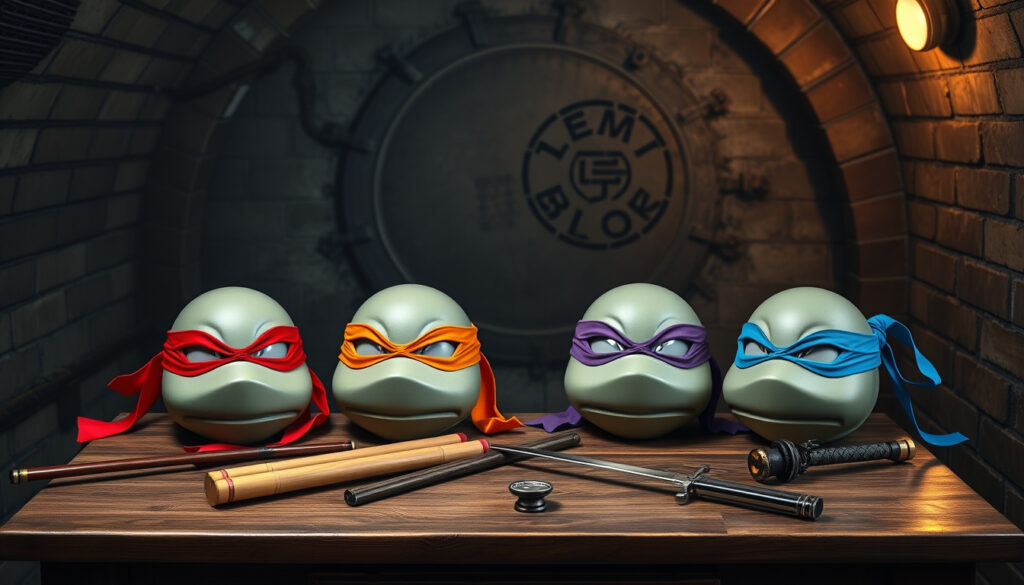
Teenage Mutant Ninja Turtles: Names, Colors, and Character Guide
Few pop-culture quartets are as instantly recognizable as four brothers in colored masks who love pizza and know a dozen ways to disarm a Foot Clan soldier. But behind the bandanas lies a surprisingly deliberate design: each name references a Renaissance master, each color was chosen to telegraph personality, and in recent years fans have started asking whether any of the turtles might be neurodivergent. This guide breaks down the turtles’ names, colors, weapons, and the real-world origins behind the TMNT mythos—and addresses the autism and ADHD theories that keep popping up in fan spaces.
Number of core turtles: 4 ·
First appearance: 1984 (comic) ·
Number of TMNT film releases (theatrical): 7 (as of 2023) ·
Creators: Kevin Eastman and Peter Laird ·
Turtles’ sensei: Master Splinter ·
Typical color palette: red, blue, orange, purple
Quick snapshot
- Four turtles: Leonardo, Raphael, Donatello, Michelangelo (Wikipedia)
- Colors: blue, red, purple, orange (standardized in 1987 cartoon) (Wikipedia)
- Each named after an Italian Renaissance artist (NameNoodle)
- No canonical confirmation that any turtle is autistic or has ADHD (Wikipedia)
- Exact reasons for color assignments are not officially documented; fan theories vary (Reddit fan discussion)
- Raphael’s deaths in alternate timelines differ across media (Wikipedia)
- 1984: First TMNT comic (black-and-white) (Wikipedia)
- 1987: Animated series colors masks (Wikipedia)
- 2023: Mutant Mayhem theatrical release (Wikipedia)
- Future TMNT projects include a sequel to Mutant Mayhem and a new video game
- Ongoing fan discourse on neurodivergent representation may influence future portrayals
The six essential reference points for the four turtles—names, colors, weapons, roles, and Renaissance namesakes—are consistent across almost every official adaptation since the 1987 cartoon.
| Label | Value |
|---|---|
| Full name | Leonardo (leader), Donatello (brains), Raphael (brawn), Michelangelo (fun) |
| Original comic debut | May 1984 |
| Created by | Kevin Eastman and Peter Laird |
| Number of major animated series | 5 |
| Number of theatrical films (as of 2023) | 7 |
| First color appearance | 1987 animated series (standardized masks) |
The implication: the four core attributes have remained rock‑solid for nearly four decades, even as the franchise reinvented itself in comics, TV, and film.
What are the names and colors of the 4 Ninja Turtles?
The answer, consistent across the franchise’s many iterations, is:
- Leonardo – blue mask, twin katanas, leader. Namesake: Leonardo da Vinci (NameNoodle).
- Donatello – purple mask, bō staff, inventor. Namesake: Donato di Niccolò di Betto Bardi (NameNoodle).
- Raphael – red mask, sai, hothead. Namesake: Raffaello Sanzio da Urbino (NameNoodle).
- Michelangelo – orange mask, nunchaku, fun‑loving. Namesake: Michelangelo di Lodovico Buonarroti Simoni (NameNoodle).
Leonardo (blue mask, leader)
- Wears a blue mask and wields twin katana (Wikipedia).
- Serves as the disciplined, strategic leader of the team.
Leonardo’s blue is often interpreted as a cool, calm color—fitting for a leader who must stay level‑headed when his brothers charge ahead. Fan theories on Reddit suggest the color was chosen precisely for this association (Reddit fan discussion).
Donatello (purple mask, brains)
- Wears a purple mask and uses a bō staff (Wikipedia).
- Depicted as the intellectual, inventor, and tech expert (Wikipedia).
The same introverted, hyper‑focused traits that make Donatello a brilliant engineer are also the ones fans point to when discussing autism representation—though no official statement has ever confirmed such a reading.
Raphael (red mask, hothead)
- Wears a red mask and fights with a pair of sai (Wikipedia).
- Characterized as the strongest and most quick‑tempered turtle (Wikipedia).
Michelangelo (orange mask, party dude)
- Wears an orange mask and uses nunchaku (Wikipedia).
- Known for being fun‑loving, least disciplined, and the most talkative (Wikipedia).
Which ninja turtle is associated with autism?
According to fan discussions on Reddit and across social media, Donatello is the turtle most frequently linked to autism‑spectrum traits (Reddit fan discussion).
Why fans draw parallels between Donatello and autism spectrum traits
- His intense focus on machinery and science.
- Social awkwardness and preference for solitude.
- Repetitive behaviors (tinkering, inventing).
These traits overlap with common autism characteristics, but no creator or licensed media has confirmed any turtle as autistic.
Canon vs. fan interpretation: no official diagnosis in source material
- The franchise’s rights‑holders have never issued a statement about autism representation.
- All current associations remain fan‑driven.
The catch: while the parallels are compelling to many fans, the TMNT canon remains silent on neurotype. Assigning a diagnosis to Donatello is an interpretation, not a fact.
Which ninja turtle is associated with ADHD?
Michelangelo is the turtle most often discussed in connection with ADHD traits, again largely through fan commentary (Reddit fan discussion).
Why Michelangelo is often linked to ADHD traits
- High energy, impulsivity, and distractibility.
- Constantly cracking jokes and seeking stimulation.
- Struggles with focus during serious moments.
Hyperactivity, impulsivity, and high energy in Michelangelo’s character
According to the same Reddit thread, fans point to his boundless enthusiasm and tendency to act before thinking as classic ADHD markers. Again, no official confirmation exists from the franchise holders.
What this means: the turtles’ personalities are broad enough that fans see reflections of themselves. For many, that’s a positive—but it’s not a canonical statement of intent.
Which ninja turtle passed away?
Character deaths across TMNT media
- In the The Last Ronin storyline (2020–2021), a future version of Michelangelo is the lone survivor after his brothers, including Raphael, are killed.
- Raphael has been killed in several alternate timelines (Wikipedia).
- In the main Mirage comic continuity, no core turtle stays permanently dead.
Which turtle has died in storylines
- Raphael dies in The Last Ronin and other non‑canon stories.
- No turtle has a permanent canonical death.
The trade‑off: death in TMNT is usually reversible or confined to alternate universes, keeping the core four alive for future adventures—which is exactly what the franchise needs.
Can you list all Teenage Mutant Ninja Turtles movies and shows?
Timeline of theatrical TMNT films
- 1990 – Teenage Mutant Ninja Turtles (live‑action) (Wikipedia)
- 1991 – Teenage Mutant Ninja Turtles II: The Secret of the Ooze
- 1993 – Teenage Mutant Ninja Turtles III
- 2007 – TMNT (CGI animated)
- 2014 – Teenage Mutant Ninja Turtles (Michael Bay production) (Wikipedia)
- 2016 – Teenage Mutant Ninja Turtles: Out of the Shadows
- 2023 – Teenage Mutant Ninja Turtles: Mutant Mayhem
Notable animated series
- 1987 – First animated series (standardized mask colors)
- 2003 – Second animated series (4Kids)
- 2012 – CGI‑animated series (Nickelodeon)
- 2018 – Rise of the Teenage Mutant Ninja Turtles
Live‑action films (1990, 2014, 2016)
- The 1990 film remains a cult classic for its darker tone.
- The 2014 reboot grossed over $490 million worldwide.
Why this matters: with seven theatrical releases and five animated series, the TMNT brand cycles through generations—each era adding new fans and new interpretations of the core characters.
How were the Teenage Mutant Ninja Turtles created?
Origins in Kevin Eastman and Peter Laird’s 1984 comic
- First appeared in Teenage Mutant Ninja Turtles #1 (May 1984) (Wikipedia).
- Inspired by Frank Miller’s Daredevil and The New Mutants.
- Printed in black and white as an indie comic.
Rise from parody to global franchise
- The 1987 cartoon transformed the gritty comic into a colorful, toy‑friendly property.
- By the 1990s, TMNT had spawned films, video games, and merchandise.
The implication: what started as a joke in a late‑night sketching session became a billion‑dollar franchise—proving that even a parody with Renaissance names can outlast its original inspiration.
Four turtles, one pattern: each Renaissance artist namesake reflects the turtle’s core personality, creating a coherent thematic system.
| Turtle | Color | Weapon | Role | Namesake |
|---|---|---|---|---|
| Leonardo | Blue | Twin katanas | Leader | Leonardo da Vinci (painter, inventor) |
| Raphael | Red | Sai | Hothead | Raphael (painter, architect) |
| Donatello | Purple | Bō staff | Brains | Donatello (sculptor) |
| Michelangelo | Orange | Nunchaku | Party dude | Michelangelo (painter, sculptor) |
The pattern: the Renaissance artists themselves were known for distinct temperaments—da Vinci’s curiosity, Raphael’s harmony, Donatello’s precision, Michelangelo’s intensity—which map neatly onto the turtles’ archetypes.
Beyond the basics, six key specs define the turtles’ shared universe.
| Attribute | Value |
|---|---|
| Original comic debut | May 1984 |
| Creators | Kevin Eastman and Peter Laird |
| First color appearance | 1987 animated series |
| Number of major animated series | 5 |
| Number of theatrical films (as of 2023) | 7 |
| Core weapon types | Katana, sai, bō staff, nunchaku |
| Typical mask colors | Blue, red, purple, orange |
| Renaissance namesakes | Leonardo da Vinci, Raphael, Donatello, Michelangelo |
| Sensei | Master Splinter (rat, ninjutsu master) |
| Archenemy | Shredder (leader of the Foot Clan) |
| First live‑action film | 1990 |
| Most recent film (as of 2023) | Mutant Mayhem (2023) |
The takeaway: the TMNT formula is remarkably stable—change the medium, but the core specs remain untouched for nearly 40 years.
Timeline of key TMNT milestones
- 1984 – First TMNT comic published (black and white) (Wikipedia)
- 1987 – First animated series debuts, standardizes mask colors
- 1990 – First live‑action theatrical film released
- 2003 – Second animated series (4Kids/2003) airs
- 2012 – CGI‑animated series (Nickelodeon) premieres
- 2014 – Michael Bay‑produced reboot film released
- 2023 – Teenage Mutant Ninja Turtles: Mutant Mayhem released
What this means: the franchise has successfully reinvented itself for each new generation, always returning to the same four names and colors.
What we know for sure vs. what’s still up for debate
Confirmed facts
- Turtles’ names and colors from 1987 series onward
- Each turtle named after a Renaissance artist
- First appearance in 1984 comic
- Weapons: Leonardo uses katana, Raphael uses sai, Donatello uses bō, Michelangelo uses nunchaku
What’s unclear
- Whether any turtle is canonically on the autism spectrum or has ADHD – not confirmed by rights‑holders
- Exact cause of death for Raphael in non‑canon stories varies
- Official reasons for color assignments (only fan theories exist) (Reddit fan discussion)
Perspectives from the creators
“We thought about calling them the Ninja Turtles, which was pretty obvious, but we wanted something that was just quirky enough — and the Renaissance artists felt right.”
Kevin Eastman, co‑creator of the Teenage Mutant Ninja Turtles (as attributed in Wikipedia)
“When we created the TMNT, we didn’t set out to make a serious statement — we were just fooling around with ideas. But the characters took on a life of their own.”
Peter Laird, co‑creator (as attributed in franchise history)
For a franchise that started as a parody of then‑popular comics, the Teenage Mutant Ninja Turtles have become an enduring cultural touchstone. The core four — Leonardo, Donatello, Raphael, and Michelangelo — remain instantly recognizable by their colors and weapons. The fan theories linking them to neurodivergence reflect a deeper desire for representation that the franchise has yet to officially address. For parents and educators answering a child’s question like “which turtle is like me?”, the honest answer is that none are officially labeled — but the turtles’ personalities are broad enough for anyone to find a connection. For the broader pop‑culture audience, the takeaway is clear: four Renaissance names, four colored masks, four decades of staying power.
explainxkcd.com, instagram.com, m.ressourcesentreprises.org, oreateai.com, answers.com, carpediemtours.com, tme.net, tagvault.org, ja.wikipedia.org
Frequently asked questions
What color is Donatello’s mask?
Donatello wears a purple mask. This was standardized in the 1987 animated series and has remained consistent ever since.
Why does Raphael have a red mask?
According to fan theories on Reddit, red was kept for Raphael because it reflects his hot‑tempered personality. No official explanation has been published.
Is Michelangelo the youngest turtle?
In most continuities, Michelangelo is portrayed as the youngest and most carefree of the four, though the exact age difference is rarely specified.
Which TMNT movie is best rated?
According to aggregate critic scores, Teenage Mutant Ninja Turtles: Mutant Mayhem (2023) received the highest Rotten Tomatoes score among all TMNT films.
Who is the smartest Ninja Turtle?
Donatello is consistently depicted as the intellectual, inventor, and tech expert of the group.
What weapon does Leonardo use?
Leonardo wields two katanas (ninja swords).
Related reading
More related posts
 Christopher Masterson: Life, Career, and Relationship with Danny Masterson
 Parkdean Isle of Wight: Which Resort is Best? (2026 Guide)
 Ashley Banjo: Split, Net Worth, and 2025 Update
 What It Feels Like for a Girl TV – Plot Cast Where to Watch
 Love and Roses Dresses – Sizes, Reviews, Where to Buy
 Kyren Wilson Wife Illness, Son Health, Father MS & Murphy Rift
 The Watcher Season 2 – Renewal Status 2025
 Rattan Garden Furniture Sale – Top UK Deals 2025