Kilimanjaro Peak: How Hard Is the Climb and What to Know
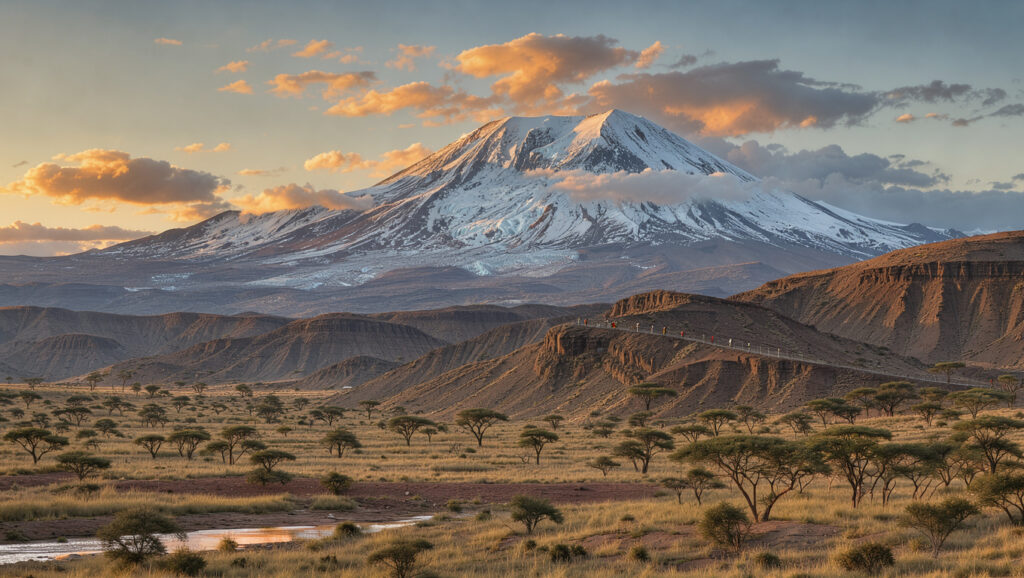
If you have ever asked whether a fit friend can simply walk up Kilimanjaro, you are asking the right question, because the height is only half of the answer. The summit reaches 5,895 m (19,341 ft), according to PunParade (citing TANAPA), yet the standard routes need no ropes, so judge the climb by altitude, fitness and season rather than by elevation alone.
Summit elevation: 5,895 m (19,341 ft) · Country: Tanzania · Continent: Africa · Highest summit: Uhuru Peak, on Kibo’s crater rim · Standing status: Highest free-standing mountain in the world
Quick snapshot
- Standard routes need no ropes, ice axes or crampons (Global Summit Guide (climbing guide site))
- Uhuru Peak sits at 5,895 m (19,341 ft) (PunParade, citing TANAPA) (Global Summit Guide (climbing guide site))
- Licensed operators and registered guides are required, and solo climbing is not permitted (TourHQ (citing TANAPA on licensing))
- Summit success rates are given as 45-65%, 65-80% and 85-95%, with no reconciliation between sources (Newsmatter.uk (UK travel guide))
- Current park fees, which sources report as a range rather than one published schedule (Global Summit Guide and MachuPicchu.org) (Newsmatter.uk (UK travel guide))
- Annual climber numbers and a verified fatality rate, since the retrieved sources supply no figure for either (Newsmatter.uk (UK travel guide))
- Dry-season windows run from January to mid-March and mid-June to October (African Tour Operators Association (industry listing))
- The long rains run from late March to May, and one operator guide advises against climbing then (Olympus Adventure (operator guide))
- Peak-season departures can fill, so booking 6 to 9 months ahead is advised (PeakPlanet (trek planning blog))
- Verify operator licensing independently before paying a deposit (Newsmatter.uk, UK travel guide) (PeakPlanet (trek planning blog))
Eight core figures frame the rest of this guide, one pattern: the summit height stays fixed, while route, season and operator choices decide almost everything else.
| Fact | Detail |
|---|---|
| Summit elevation | 5,895 m (19,341 ft) |
| Country | Tanzania |
| Continent | Africa |
| Highest summit | Uhuru Peak, on Kibo’s crater rim |
| Standing status | Highest free-standing mountain in the world |
| Typical climb duration | 5 to 8 days (TANAPA); 6 to 9 days (several operators) |
| Recommended minimum itinerary | 7 days (7-9 days preferred) |
| Licence rule | Licensed operator and registered guide required; solo climbing not permitted |
| Dry-season windows | January to mid-March and mid-June to October |
How hard is Mount Kilimanjaro to climb?
Kilimanjaro is walked rather than climbed with technical gear, so the difficulty comes from the body, not the rock. Days are long, the air thins as you ascend, and the summit push starts in the dark. Fitness helps, but the cumulative load of several days is what most first-timers underestimate.
How fit do you need to be to walk Kilimanjaro?
- The main requirement is hiking 5 to 8 hours a day over 6 to 9 consecutive days (African Tour Operators Association, industry listing)
- Three to six months of cardiovascular training is the window operators commonly recommend (Global Summit Guide (climbing guide site))
- Typical climbs run 5 to 8 days according to TANAPA, and 6 to 9 days according to several operators (PunParade, citing TANAPA)
- The research gives no fitness threshold or test score, so no single number decides who can summit
Which is harder, Machu Picchu or Kilimanjaro?
- Kilimanjaro’s summit sits at 5,895 m, and that altitude is the figure driving its challenge
- The research supplies no sourced altitude for Machu Picchu, so this guide cannot measure the gap in metres
- The comparison turns on altitude exposure and endurance, not on technical skill, because standard Kilimanjaro routes need no ropes
The summit height is the headline, yet the route itself is non-technical. Readers who judge by elevation alone will underrate the days spent acclimatizing and overrate the summit push, which is the shorter part of the effort.
The implication: fitness sets your starting line, but staying steady for a full week sets your finish line. Train with long walks under a loaded pack, not only with short gym sessions.
Can an average person climb Kilimanjaro?
Average fitness is enough to start, but the decisive factors are medical and physiological. Prior mountaineering experience is not required for the standard non-technical routes, so the real question becomes how your body handles altitude across several days.
Can a beginner climb Kilimanjaro?
- Nyanga Adventures reports that Lemosho is widely recommended for first-time climbers because of its acclimatization profile and quieter trail (Nyanga Adventures (safari operator FAQ))
- Medical fitness and the body’s response to altitude decide whether a climber can keep going
- Licensed operators and registered guides are mandatory, so a beginner cannot go alone
Is 50 too old to climb Kilimanjaro?
- The research turned up no age cutoff for the standard routes
- Nyanga Adventures says climbers from teens to seventies summit each year when fitness and acclimatization are managed (Nyanga Adventures, safari operator FAQ)
- Age alone does not decide suitability; medical clearance and pacing do
What this means: at 50, the screening question is medical clearance and pacing, not a birthday rule.
What is the best month to climb Kilimanjaro?
Climbers plan around two dry seasons. The long rains bring cloud, mud and reduced visibility, so the date you choose changes the day-to-day trail experience more than the summit height does.
How many people climb Kilimanjaro each year?
- The research for this guide includes no annual climber count
- A reliable figure needs a named park or tourism statistic that carries a year
- Until one is sourced, treat any headline number as unverified
A dry season lowers the odds of a miserable trail, but it does not lower the altitude load. Choose the window for comfort, and choose the itinerary for the summit.
The implication: pick a dry-season window first, then judge operators on how they handle the cloud and mud the calendar still brings.
How much does it typically cost to climb Kilimanjaro?
No single price fits every trip. Operator packages vary by route length and service level, and one figure would mislead most readers.
Park fees are set by Tanzanian authorities and apply regardless of operator. For a standard 7-day climb, Global Summit Guide (climbing guide site) reports figures from about $955 to $1,210, and the sources do not agree on one number.
What are 10 things I wish I knew before climbing Kilimanjaro?
Most of the money and risk decisions happen before you fly. Fix the operator, the itinerary and the insurance first, and the mountain becomes the easier part of the plan.
- Book through a licensed operator, because independent solo climbing is not permitted (TourHQ, citing TANAPA on licensing)
- Budget for park fees on top of the package price, because Tanzanian authorities set them, and choose a seven-day or longer itinerary, since seven to nine days is the preferred minimum (Global Summit Guide)
- Book peak-season departures six to nine months ahead, because groups can fill (PeakPlanet, trek planning blog)
- Ask for a guide ratio of at least one guide to two or three climbers, with wilderness first aid certification for guides (Olympus Adventure, operator guide)
- Check visa and vaccination requirements early, since PeakPlanet reports that Tanzania requires a visa for most nationalities
- Pack layered clothing, a summit-night down jacket and trekking poles (East Africa Gorilla Safaris (safari operator guide))
- Confirm that travel insurance covers trekking to about 6,000 m and helicopter evacuation, and ask operators for daily pulse-oximetry checks, emergency oxygen and a written evacuation plan (Olympus Adventure, operator guide)
- Expect cold, dark summit nights, when temperatures can fall well below freezing (Global Summit Guide reports about -15°C near the summit)
What is the fatality rate of Kilimanjaro?
No verified fatality rate appears in the research for this guide. Gorilla Nests Safaris (safari operator) reports mortality of roughly 0.03%, usually altitude-related, but the figure has no official dataset behind it.
How do climbers reduce altitude sickness risk?
- Reputable operators are expected to provide twice-daily pulse-oximetry checks, bottled oxygen for emergency descent, a portable hyperbaric (Gamow) bag and a written evacuation plan (Olympus Adventure, operator guide)
- Descent is the standard step when altitude illness worsens, which is why guided pacing matters
- Acute mountain sickness is reported as the top reason for summit failure or turnaround (Gorilla Nests Safaris, safari operator)
Success rates, mortality figures and altitude-sickness prevalence in circulation conflict with one another or lack a primary source. Treat any single number as a sales claim until a named park or medical body backs it.
The implication: the safety question is about the operator’s system as much as your own body. Ask for the pacing, oxygen and evacuation plan in writing before you pay.
Four choices change the odds more than the summit height does, one pattern: longer itineraries and dry-season timing buy the most margin.
| Option | What the sources report | Trade-off |
|---|---|---|
| Marangu vs Machame | Marangu is the only hut-based route and is often cited with lower success rates; Machame is steeper and more scenic (Newsmatter.uk, UK travel guide) | Fewer huts and a steeper profile suit fit hikers who want views |
| 5-day vs 7-day or longer | Summit success on 5-day routes is reported at roughly 27% to under 50%, and longer itineraries are associated with higher success (Olympus Adventure, operator guide) | More days and more cost in exchange for acclimatization time |
| Budget vs premium packages | Inclusions, guide ratios and emergency equipment vary by operator tier | A lower package price usually means fewer inclusions |
| Dry season vs long rains | Dry windows run January to mid-March and mid-June to October; long rains run late March to May | June to October brings more climbers, while the long rains bring cloud and mud |
Upsides
- Standard routes are non-technical, so no ropes or crampons are needed
- Licensed operators and guides handle the logistics
- Dry seasons offer the most stable conditions
Downsides
- Altitude is the main challenge, and it builds over several days
- Summit night means hours of cold, dark uphill walking
- Park fees, guides and packages stack into a high total
Confirmed facts
- Uhuru Peak is the highest summit, on Kibo’s crater rim (PunParade, citing TANAPA)
- Kilimanjaro is the highest free-standing mountain in the world (PunParade, citing TANAPA)
- Solo independent climbing is not permitted (TourHQ, citing TANAPA)
- The summit sits at 5,895 m (19,341 ft) (PunParade)
What’s unclear
- The summit success rate, since sources conflict
- Current park fees, since sources report different figures
- The annual number of climbers
- The fatality rate
- The volcanic status beyond “dormant” as used by primary geological sources
“Success depends more on acclimatisation and pacing than extreme fitness levels.”
African Tour Operators Association, industry listing
“Kilimanjaro is a 5,895 m walk-up — no ropes or technical climbing — but it is a serious high-altitude trek.”
“Summit night … is the hardest single day most climbers will ever face.”
The height is the headline, but the work is spread across six to nine days of walking, cold nights and altitude that builds slowly. A seven-day or longer itinerary with a licensed operator matters more than any single price or season. For first-time climbers, the choice is clear: book a seven-day or longer route with a licensed operator, or accept lower summit odds on a five-day itinerary.
Related reading: Bear Grylls adventure career and survival background · Simon Reeve travel presenter biography
Frequently asked questions
Is Kilimanjaro volcano still active?
The research behind this guide does not confirm a current status. Geological references describe the volcano as dormant, but the exact wording needs checking against the Smithsonian Global Volcanism Program listing.
What is the elevation of Mount Kilimanjaro?
Uhuru Peak, the highest summit, sits at 5,895 m (19,341 ft) on Kibo’s crater rim.
Which country is Mount Kilimanjaro in?
Mount Kilimanjaro is in Tanzania.
How far is the distance to the summit of Kilimanjaro?
The research gives no verified horizontal distance. It does give time: summit-bound climbs typically take 5 to 8 days according to TANAPA, and 7 days is the recommended minimum itinerary.
Which continent is Mount Kilimanjaro located in?
Mount Kilimanjaro is in Africa, and it is described as the continent’s highest peak.
More related posts
 Cast of Mary Poppins (1964): Ages, Roles, and Where They Are Now
 The Lord of the Rings: The War of the Rohirrim – Complete Guide
 What Is Stranger Things About? Storyline, Cast & Age Guide
 What Is Big Data? Definition, 5 V’s, Types & Examples
 Ball Pit: Meaning, Benefits, DIY Guide & Safety Tips
 Amelia Flanagan: Biography, Family & Real-Life Soap Ties
 Will Ferrell: Height, Health Rumors, and Relationships Explained
 Elon Musk: Background, Companies, Family and Key Facts